

Pinterest for SEO is often misunderstood as a secondary social tactic, but in reality, Pinterest operates as a powerful visual discovery engine designed around search behavior, intent-driven exploration, and long-term content indexing. Unlike traditional social platforms where posts rapidly lose visibility, Pinterest Pins are built to resurface repeatedly as users search, save, and plan over extended periods of time.
Very early in the conversation about how visibility works beyond traditional rankings, it becomes clear that social platforms influence discoverability in indirect but meaningful ways. This broader relationship between engagement and search performance is explored in Social Media in SEO: How Engagement Influences Organic Visibility, which helps frame Pinterest not as a distraction from SEO, but as a complementary channel that amplifies it.
What makes Pinterest different is longevity. A single well-optimized Pin can continue driving impressions, saves, and clicks months or even years after publication. Instead of chasing fleeting engagement, Pinterest rewards relevance, clarity, and structure. Content is discovered through keyword-driven searches, visual similarity, and contextual relationships between Pins and boards.
Because Pinterest blends search intent with visual storytelling, it sits in a unique position within an organic growth strategy. When optimized correctly, Pinterest extends content lifespan, strengthens topical authority, and supports broader SEO objectives without the constant publishing pressure seen on other platforms.
Essential Pinterest SEO Strategies
Pinterest SEO is not built on a single tactic. It is the result of structured optimization across profiles, boards, visuals, metadata, and engagement signals. Each element contributes to how content is indexed and distributed.
1. Profile Architecture: Building a Search-Ready Foundation
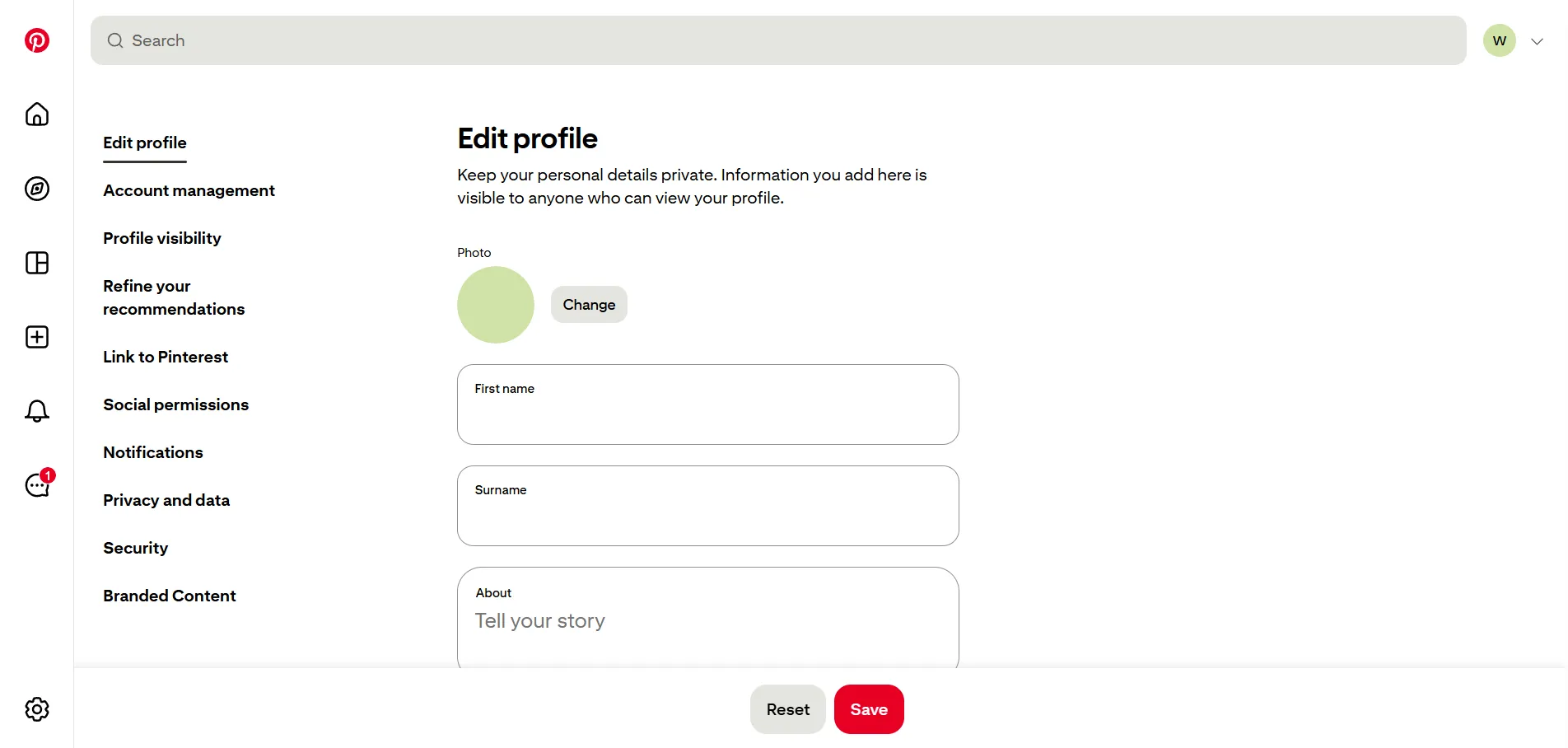
Your Pinterest profile functions as the root of your topical authority. Before individual Pins can perform, Pinterest needs to understand who you are and what your content represents.
Key elements of profile optimization include:
- Transitioning to a business account to unlock analytics, Rich Pins, and credibility signals.
- Optimizing the display name to include a primary topic or keyword rather than only a brand name.
- Writing a bio that clearly communicates content focus, using natural language rather than keyword stuffing.
- Linking your verified website to establish trust and ownership.
Pinterest scans profile-level data to determine relevance. A clear, keyword-aligned profile helps every Pin published under it perform more effectively.
2. Keyword Mapping: Discovering How Users Search on Pinterest
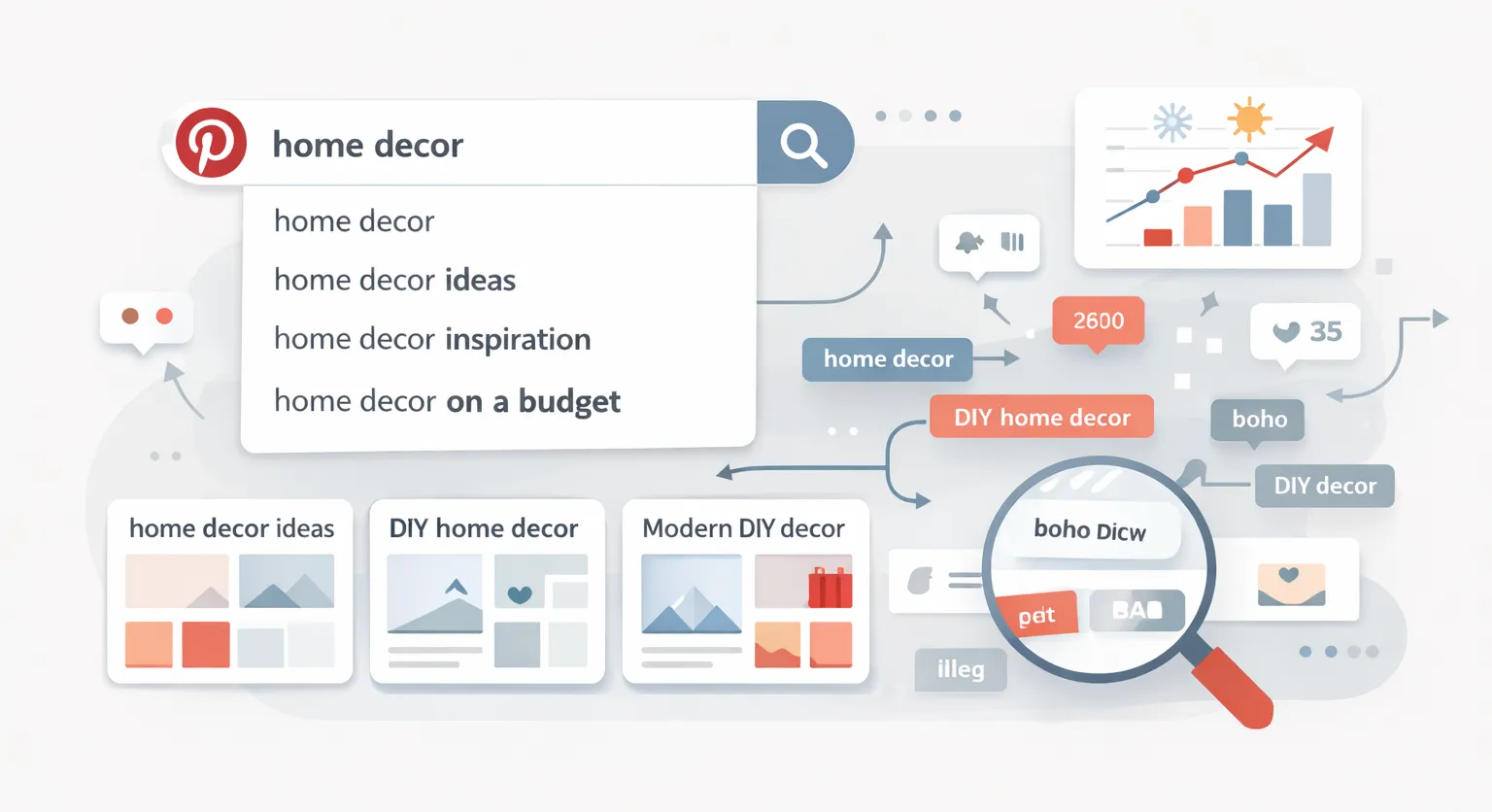
Pinterest search behavior differs from Google, but keywords remain central to visibility. Users search with intent, often using short phrases related to planning, inspiration, and solutions.
Effective keyword mapping involves:
- Using the Pinterest search bar to observe auto-suggestions, which reflect real user demand.
- Exploring Pinterest Trends to identify seasonal spikes and evergreen interest.
- Reviewing guided search modifiers that appear beneath search results.
- Analyzing competitor boards and high-performing Pins for recurring language patterns.
These methods help uncover Pinterest SEO keywords that align with how users actually search, allowing content to match intent rather than assumptions.
3. Board Hierarchy: Creating Digital Filing Cabinets
Boards are not just containers for Pins. They are primary ranking assets that signal topical depth and organization.
Best practices for board structure include:
- Creating narrowly focused boards centered on a single theme.
- Writing descriptive board titles that align with search queries.
- Adding keyword-informed board descriptions that explain the value of the content.
- Avoiding mixed-topic boards that dilute relevance.
When boards are treated like structured content hubs, Pinterest can more easily categorize and distribute every Pin within them.
4. Visual Data Optimization: Designing for Search and Discovery
Pinterest is a visual platform, but design choices influence search visibility as much as aesthetics. The algorithm evaluates images for clarity, readability, and contextual relevance.
Effective visual optimization includes:
- Designing Pins in a 2:3 aspect ratio to maximize screen space.
- Using high-contrast text overlays that communicate value instantly.
- Ensuring text is readable on mobile devices.
- Creating visuals that Pinterest Lens can interpret for visual search.
Clear, intentional visuals improve saves and clicks, reinforcing quality signals that affect distribution.
5. Metadata Mastery: Optimizing Titles and Descriptions
Metadata provides the textual layer that connects visuals to search queries. Pin titles and descriptions should guide both users and the algorithm.
Strong metadata practices include:
- Writing clear, descriptive titles that reflect search intent.
- Using natural language keywords early in descriptions without forcing repetition.
- Expanding descriptions to explain what users will gain by clicking.
- Ending with a clear Call to Action, such as learning more or exploring a guide.
Well-written metadata improves relevance and click-through rates while supporting long-term indexing.
6. Rich Pin Integration: Strengthening Authority Signals
Rich Pins pull structured data directly from your website and attach it to your content automatically.
Benefits of Rich Pins include:
- Consistent titles and descriptions synced from your site.
- Enhanced credibility for articles, recipes, or products.
- Improved engagement through richer context.
By enabling Rich Pins, you reinforce content accuracy and authority, which supports broader Pinterest SEO performance.
7. The Freshness Rule: Feeding the Algorithm New Signals
Pinterest prioritizes fresh content, defined as new creative assets, not just new URLs.
Freshness strategies include:
- Designing multiple unique Pins for the same page.
- Updating visuals to match seasonal or trending themes.
- Publishing consistently rather than sporadically.
- Avoiding repetitive re-pinning of identical designs.
Fresh creative signals tell Pinterest that your content remains relevant and valuable.
8. Engagement Signals: Understanding What Drives Ranking
Engagement is a core distribution factor. Pinterest interprets user behavior as feedback on content quality.
Key engagement signals include:
- Saves, indicating long-term usefulness.
- Outbound clicks, confirming relevance.
- Close-ups, showing deeper interest.
High engagement increases the likelihood that Pins will surface in search results and recommendations.
Measuring Success with Analytics
Pinterest SEO is a long-term investment, but performance data is essential for refinement and growth.
Using Pinterest Analytics to Track Performance
Pinterest Analytics provides insights into how content performs across discovery and engagement metrics.
Key areas to monitor include:
- Impressions and clicks by Pin.
- Boards driving the most traffic.
- Audience interests and content categories.
- Search terms associated with high-performing Pins.
These insights help identify which optimizations are working and where adjustments are needed.
Before moving into the conclusion, it is important to reinforce the broader context. Platforms that generate engagement, saves, and referral traffic contribute to stronger discoverability overall, highlighting how social engagement supports organic search performance across channels.

Conclusion of Pinterest for SEO
Pinterest offers a rare combination of search intent, visual storytelling, and content longevity. Once boards are structured, keywords mapped, and visuals optimized, the platform continues working with minimal ongoing effort.
This is what makes Pinterest feel almost like a set it and forget it channel. Content does not expire quickly, and well-optimized Pins can deliver steady traffic long after publication.
The final takeaway is simple. Consistency in publishing, relevance in keyword usage, and clarity in visual communication determine success. When these elements align, Pinterest for SEO becomes a sustainable engine for organic visibility rather than just another social platform to manage.