

Social media marketing for small business has become an essential part of building a strong online presence and staying competitive in today’s digital landscape. As businesses explore different ways to grow online, many also look into broader strategies like Digital Marketing for Small Business: A Complete Guide to Online Growth to understand how social media fits into the bigger picture.
Social media platforms give small businesses the opportunity to connect directly with their audience, share updates, and promote products or services in a more engaging way. These platforms also help build brand awareness by reaching new audiences who may not have discovered the business otherwise.
One of the biggest advantages is that marketing through social media is relatively cost-effective compared to traditional methods. Even businesses with limited budgets can achieve meaningful results by using a well-planned strategy, consistent content, and regular interaction with their audience.
Benefits of Social Media Marketing for Small Businesses
Using social media for small business growth offers many advantages. The key benefits are explained below.
1. Increased Brand Awareness
Social media platforms allow businesses to introduce their brand to a broader audience and reach potential customers who may not have discovered them otherwise. Consistent posting, engaging visuals, and informative content help businesses strengthen brand recognition while expanding their digital presence.
2. Cost-Effective Marketing
Compared to many traditional advertising methods, social media marketing for small business offers an affordable way to promote products and services. Businesses can share updates, promotions, and valuable content while reaching large audiences without significant marketing expenses when strategies are implemented effectively.
3. Better Customer Engagement
One major advantage of social media for small business is the ability to communicate directly with customers. Businesses can respond to comments, answer questions, and interact through messages, helping create meaningful relationships and improving customer satisfaction.

4. Increased Website Traffic
Sharing blog articles, product updates, and promotional posts on social platforms encourages users to visit a company website. This increased traffic can improve visibility, attract potential buyers, and help businesses convert online visitors into customers.
5. Improved Customer Insights
Social media platforms provide analytics tools that help businesses understand their audience better. These insights reveal engagement patterns, interests, and content performance, helping businesses improve their small business social media marketing strategy and create content that resonates with their target audience.
Social Media Marketing Strategies for Small Businesses
A successful online presence requires clear planning and consistent effort. The following strategies can help beginners build an effective approach to social media marketing for small business.
1. Choose the Right Social Media Platforms
Selecting the right platform is one of the most important steps in small business social media marketing. Instead of trying to be active everywhere, businesses should focus on platforms where their target audience spends the most time.
- Facebook: Facebook is widely used for community building and local marketing. Businesses can share posts, images, videos, events, and updates while interacting with customers through comments, messages, and groups.
- Instagram: Instagram is ideal for visual content and brand storytelling. Businesses often use photos, reels, and short videos to showcase products, highlight brand personality, and promote offers.
- Twitter: Twitter, which is now renamed to X, is useful for real-time updates and participating in trending conversations. Businesses often use it to share quick announcements, respond to customer feedback, and engage in industry discussions.
- Pinterest: Pinterest is a discovery platform where users search for ideas, inspiration, and products. Businesses can share visually appealing pins that link to blog posts, product pages, or guides, helping generate long-term website traffic.
- LinkedIn: LinkedIn is primarily used for professional networking and B2B marketing. Businesses can share industry insights, company updates, and professional content to connect with potential clients and partners.
- YouTube: YouTube is a video-focused platform ideal for tutorials, product demonstrations, reviews, and educational content. Businesses can provide detailed information through videos that help audiences understand products or services better.
Businesses should select two or three platforms that align with their audience and consistently focus on those channels.
2. Define Clear Marketing Goals
Clear goals provide direction for social media marketing for small business and make it easier to measure success. Without specific objectives, businesses may stay active on social platforms but struggle to determine whether their efforts are delivering real results.
Common goals include increasing brand awareness, generating leads, driving website traffic, promoting products or services, or improving customer engagement. Each goal should be aligned with overall business objectives so that social media activities contribute directly to growth.
Having a clear understanding of marketing goals is important for professional social media marketing experts to plan targeted campaigns, track performance accurately, and optimize strategies for better results.
3. Identify Your Target Audience
Understanding the audience is essential for creating relevant content. Businesses should determine who their ideal customers are and what type of content they are most likely to engage with.
Key factors include demographics, interests, online behavior, and purchasing preferences. Social media insights, website analytics, and customer feedback can provide useful information about audience behavior. When businesses understand their audience clearly, they can create content that addresses real customer interests and needs.
4. Create a Consistent Content Strategy
Consistency helps maintain visibility and build trust with followers. Businesses should plan the types of content they want to share and how frequently they will post.
A balanced content strategy often includes educational posts, product highlights, industry tips, customer testimonials, and occasional promotional content. Planning posts in advance through a content calendar helps maintain regular activity and ensures content remains organized and purposeful.
5. Use High-Quality Visual Content
Visual content attracts attention quickly on social media feeds. Clear images, well-designed graphics, and short videos help communicate messages more effectively than text alone.
Businesses should ensure that visuals reflect their brand identity through consistent colors, fonts, and style. Product photos should highlight important details, while short videos can demonstrate product usage, share tips, or provide quick tutorials that make the content more engaging.
6. Engage With Your Audience
Social media is designed for interaction, so engagement should be an important part of any social media for small business strategy. Businesses should actively respond to comments, messages, and customer feedback.
Timely responses show that the business values its customers and is willing to communicate directly with them. Engaging with followers also encourages more interaction, which improves visibility and helps build stronger customer relationships.
7. Use Hashtags Strategically
Hashtags help categorize posts and make them discoverable to users searching for specific topics. Businesses should use hashtags that are relevant to their industry, products, or audience interests.
Combining widely used hashtags with more niche-specific ones can help reach both large and targeted audiences. Monitoring which hashtags generate engagement can also help refine future content strategies.
8. Leverage Video Marketing
Video content has become one of the most engaging formats on social platforms. Short videos can communicate information quickly while capturing audience attention.
Businesses can use video for tutorials, product demonstrations, customer stories, or behind-the-scenes content. This type of content helps explain products clearly and often generates higher engagement compared to static posts.
9. Collaborate With Influencers
Influencer collaborations allow businesses to reach audiences that already trust the influencer’s recommendations. This strategy is particularly useful for introducing products to new or niche communities.
Small businesses often benefit from partnering with micro-influencers who have smaller but highly engaged audiences. These collaborations may include product reviews, demonstrations, or social media mentions that help increase brand awareness.
10. Run Targeted Social Media Ads
Organic content helps maintain engagement, but paid advertising allows businesses to expand their reach significantly. Social media platforms provide targeting options that allow businesses to show ads to users based on demographics, interests, and location.
Targeted advertising can be used to promote products, highlight special offers, or attract visitors to a website. Because ads reach audiences that are more likely to be interested in the business, they often deliver stronger results compared to broad marketing approaches.
11. Encourage User-Generated Content
User-generated content refers to content created by customers rather than the business itself. This may include reviews, photos, testimonials, or posts that mention the brand.
Encouraging customers to share their experiences helps build authenticity and trust. Potential buyers often rely on real customer experiences when deciding whether to purchase a product or service.
12. Monitor Analytics and Performance
Monitoring analytics helps businesses understand how their content is performing. Social media platforms provide insights into engagement levels, reach, impressions, and audience growth.
By reviewing these metrics regularly, businesses can identify which types of posts generate the most engagement and adjust their strategy accordingly. Data-driven decisions help improve long-term results.
13. Use Social Media Management Tools
Managing several social platforms can become time-consuming. Social media management tools help businesses schedule posts, monitor conversations, and track performance from one dashboard.
Using these tools improves efficiency and helps maintain a consistent posting schedule, especially for businesses managing multiple accounts.
14. Stay Updated with Trends
Social media trends evolve quickly as platforms introduce new features and content formats. Businesses that stay aware of these changes can adapt their content and remain relevant.
Adopting new formats such as short-form videos, interactive posts, or trending topics can help increase visibility and keep content engaging for audiences.
15. Integrate Social Media with Your Website
Connecting social media with a business website strengthens overall online visibility. Businesses can share blog posts, product pages, or announcements from their website on social platforms to attract visitors.
This integration helps drive traffic to the website while encouraging social followers to explore more information about the business, products, or services.
Social Media Marketing Tools for Small Businesses
Managing multiple social platforms can be challenging without the right tools. The following tools simplify small business social media marketing tasks and improve productivity.
1. Hootsuite
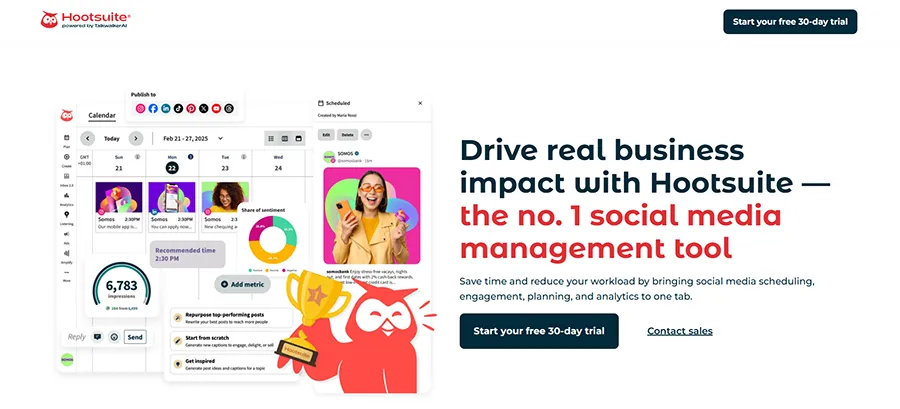
Hootsuite is a widely used social media management platform that helps businesses schedule posts, manage multiple accounts, monitor conversations, and analyze campaign performance from a single dashboard.
2. Buffer
Buffer is a beginner-friendly scheduling tool that allows businesses to publish posts across platforms while also providing analytics to track engagement and understand audience response.
3. Sprout Social
Sprout Social provides advanced analytics, reporting, and social listening features that help businesses understand audience behavior and measure campaign performance more effectively.
4. Later
Later is a visual content planner mainly designed for platforms such as Instagram, TikTok, and Pinterest. It allows businesses to preview feeds, schedule posts, and monitor performance.
5. Canva
Canva is a popular design platform that helps businesses create graphics, presentations, and marketing visuals using templates, brand kits, and collaboration features.
6. Adobe Photoshop
Adobe Photoshop is a professional image editing tool widely used for advanced photo editing, graphic design, and creating high-quality visuals for social media content.
To build a stronger online presence beyond social platforms, it is also helpful to explore a broader strategy that combines multiple channels such as search, content, and paid campaigns. Learn more in the guide on small business online marketing strategies.
Summary of Social Media Marketing for Small Business
Social media has transformed the way businesses connect with their audiences and promote their products or services. For smaller companies, it offers a powerful channel to build brand awareness, interact with customers, and strengthen their digital presence without relying heavily on traditional advertising.
By selecting the right platforms, creating consistent and engaging content, and using effective strategies, businesses can establish meaningful connections with their audience. Monitoring performance and adapting strategies based on insights further improves marketing outcomes.
With the right planning, tools, and consistent effort, social media marketing for small business can help companies grow their brand visibility, attract new customers, and maintain strong relationships with their existing audience.