

Integrating YouTube for SEO into your digital marketing strategy allows you to tap into the massive search intent of the world’s second-largest search engine while simultaneously boosting your presence on Google.
To understand the broader impact of these platforms, it is helpful to look at Social Media in SEO: How Social Engagement Influences Organic Visibility, as social signals and video interactions often work in tandem to amplify your brand’s reach. By aligning your video content with the specific algorithms that govern discovery, you transform your channel from a simple hosting service into a powerful lead-generation engine.
Success in this space requires a shift in perspective, moving beyond mere views toward high-value engagement and retention. This involves a meticulous approach to metadata, thumbnail psychology, and viewer behavior analytics.
Whether you are a seasoned creator or a business owner looking to diversify your traffic sources, this comprehensive YouTube SEO guide provides the technical framework necessary to outrank your competition and dominate the search results.
Proven YouTube SEO Strategies for Higher Rankings
Implementing YouTube SEO best practices requires a structured and consistent approach. Success does not come from a single optimization tweak but from combining multiple signals that tell the algorithm your content is relevant and valuable. The steps below outline a complete YouTube SEO strategy designed to improve rankings, increase watch time, and strengthen channel authority.
1. Conduct Keyword Research for YouTube
Keyword research forms the foundation of effective video optimization. Without the right YouTube SEO keywords, even high-quality content may struggle to rank.
Start by understanding search intent. Are users looking for tutorials, product comparisons, reviews, or explanations? The goal is to match your content format with what viewers expect when they type a query.
Here are practical ways to identify strong keyword opportunities:
- Use YouTube’s autocomplete suggestions to discover popular queries.
- Analyze competitor videos that rank for your target topic.
- Review “People also ask” and related searches on Google.
- Identify long-tail phrases with clear intent, such as “how to optimize YouTube videos for beginners.”
Long-tail keywords are particularly powerful because they often have lower competition and attract viewers with specific needs. Instead of targeting a broad term like “digital marketing,” focus on something more defined, such as “digital marketing tutorial for beginners.”
Additionally, look for keywords that trigger video results in Google search. This increases your chance of ranking beyond YouTube’s internal search engine.
2. Optimize Video Titles with Primary Keywords
Your video title is one of the strongest ranking signals. It communicates relevance to both users and the algorithm.
To optimize effectively:
- Place your primary keyword near the beginning of the title.
- Keep the wording natural and engaging.
- Avoid keyword stuffing.
- Stay within 60 to 70 characters for better display.
A strong title balances clarity and curiosity. For example, instead of writing “Video Marketing,” you could write “Video Marketing Strategies for Small Business Growth.” This version clearly explains the topic while highlighting the benefit, making it more compelling and specific.
Titles directly influence click-through rate. If your video appears in search results but fails to attract clicks, rankings may decline. Therefore, always test variations and refine wording over time.
3. Write Detailed and SEO-Friendly Descriptions
Descriptions help YouTube understand your content in greater depth. While they are not as powerful as titles, they provide additional context and reinforce keyword relevance.
Focus on the first two to three lines because they appear in search previews. Include your primary keyword naturally and clearly describe what viewers will gain.
A well-structured description should include:
- A concise summary of the video
- Supporting keywords and related phrases
- Timestamps if applicable
- Relevant links to resources
- A call to action
Avoid repeating the same phrase excessively. Instead, use semantic variations and related terms. This improves contextual understanding without appearing spammy. Think of your description as supporting documentation that strengthens your video’s topical authority.
Reputed social media marketing experts approach descriptions strategically. They carefully craft keyword-rich yet natural summaries, add structured timestamps, integrate relevant links, and guide viewers toward meaningful actions.
4. Use Strategic Tags
Although tags are not the strongest ranking factor, they still provide contextual signals. Tags help clarify your topic, especially when dealing with similar-sounding keywords or ambiguous phrases.
Use a combination of:
- Primary keyword
- Variations and synonyms
- Broad topic identifiers
- Specific long-tail phrases
Keep tags relevant and avoid irrelevant high-volume terms. Relevance always outweighs volume in YouTube SEO.
Tags work best when aligned with your title and description. Consistency across metadata elements reinforces the topic and improves algorithmic confidence.
5. Create Custom Thumbnails to Improve CTR
Thumbnails play a major role in influencing click-through rate. Even a well-optimized video can underperform if the thumbnail fails to attract attention.
Effective thumbnails typically include:
- High-contrast colors
- Clear focal points
- Minimal but bold text
- Expressive faces if applicable
Your thumbnail should visually communicate the value of your video within seconds. A higher click-through rate signals to YouTube that your content is relevant, which can positively impact rankings.
Avoid misleading thumbnails. While clickbait may increase initial clicks, poor retention will hurt performance long term.

6. Optimize Video File Names Before Upload
Before uploading your video, rename the file using your primary keyword in a clear and descriptive format. For example: video-ranking-tips-for-beginners.mp4
While this may seem like a small detail, it helps establish topical relevance from the very beginning of the upload process. The platform scans multiple data points to understand your content, and consistent naming supports that understanding.
Avoid generic file names such as final-edit-v2.mp4 or video123.mp4. These provide no contextual value. Instead, use concise, keyword-focused phrasing separated by hyphens for clarity.
Although file naming alone will not dramatically improve rankings, it contributes to a well-structured optimization workflow. When combined with strong titles, descriptions, engagement signals, and audience retention, these small refinements collectively strengthen your overall performance.
7. Improve Watch Time and Audience Retention
Watch time is one of the most influential ranking factors. The longer viewers stay on your video, the stronger the engagement signal.
To improve retention:
- Start with a compelling hook in the first 10 to 15 seconds.
- Clearly outline what viewers will learn.
- Remove unnecessary fillers and long introductions.
- Maintain a logical content structure.
- Use pattern interrupts such as visuals, graphics, or transitions.
Audience retention graphs inside YouTube Analytics reveal where viewers drop off. Use this data to refine future videos.
Remember, high rankings are often the result of sustained viewer satisfaction.
8. Encourage Engagement Signals
Engagement metrics such as likes, comments, and shares strengthen your video’s authority. Encourage viewers to interact naturally within the flow of your content.
Instead of generic requests, ask specific questions. For example: “What has been your biggest challenge with YouTube optimization?”
This approach increases meaningful comments rather than passive engagement.
Subscriber growth also contributes to channel authority. Over time, consistent engagement improves overall visibility across your entire channel.
9. Add Timestamps and Chapters
Timestamps improve user experience by allowing viewers to navigate directly to relevant sections.
Chapters can:
- Increase watch time
- Improve search snippet visibility
- Enhance accessibility
- Strengthen content structure
Structured content signals professionalism and clarity, which indirectly supports retention and engagement metrics.
10. Use Playlists to Boost Session Duration
Playlists extend session time by guiding viewers from one related video to another.
Organize playlists based on themes or series. For example:
- Beginner tutorials
- Advanced strategies
- Case studies
When viewers continue watching multiple videos within your ecosystem, YouTube interprets this as strong audience satisfaction. Session duration often contributes to stronger channel-level performance.
11. Leverage End Screens and Cards
End screens and cards help retain viewers beyond a single video. Use them to:
- Recommend related content
- Promote playlists
- Encourage subscriptions
- Drive website traffic
Strategically place cards at moments where viewers may need additional clarification. End screens should align with the topic of the video to maintain relevance.
12. Optimize for Google Search Visibility
Some queries trigger video results in Google search. Targeting these keywords increases your visibility beyond YouTube.
Search your target keyword on Google and analyze the results. If videos appear prominently, it signals strong opportunity.
Focus on:
- Tutorial-based queries
- Product demonstrations
- How-to searches
- Informational guides
Ranking on both platforms multiplies exposure and reinforces authority.
13. Maintain Consistent Publishing and Channel Authority
Consistency builds trust with both viewers and the algorithm. Posting regularly signals active channel growth.
Define a clear niche and stick to it. When your channel consistently addresses related topics, topical authority increases. Over time, YouTube recognizes your channel as a reliable source within that subject area.
Quality and consistency together create long-term momentum.
YouTube SEO Tools
A few powerful tools for YouTube SEO are given below:
YouTube Studio
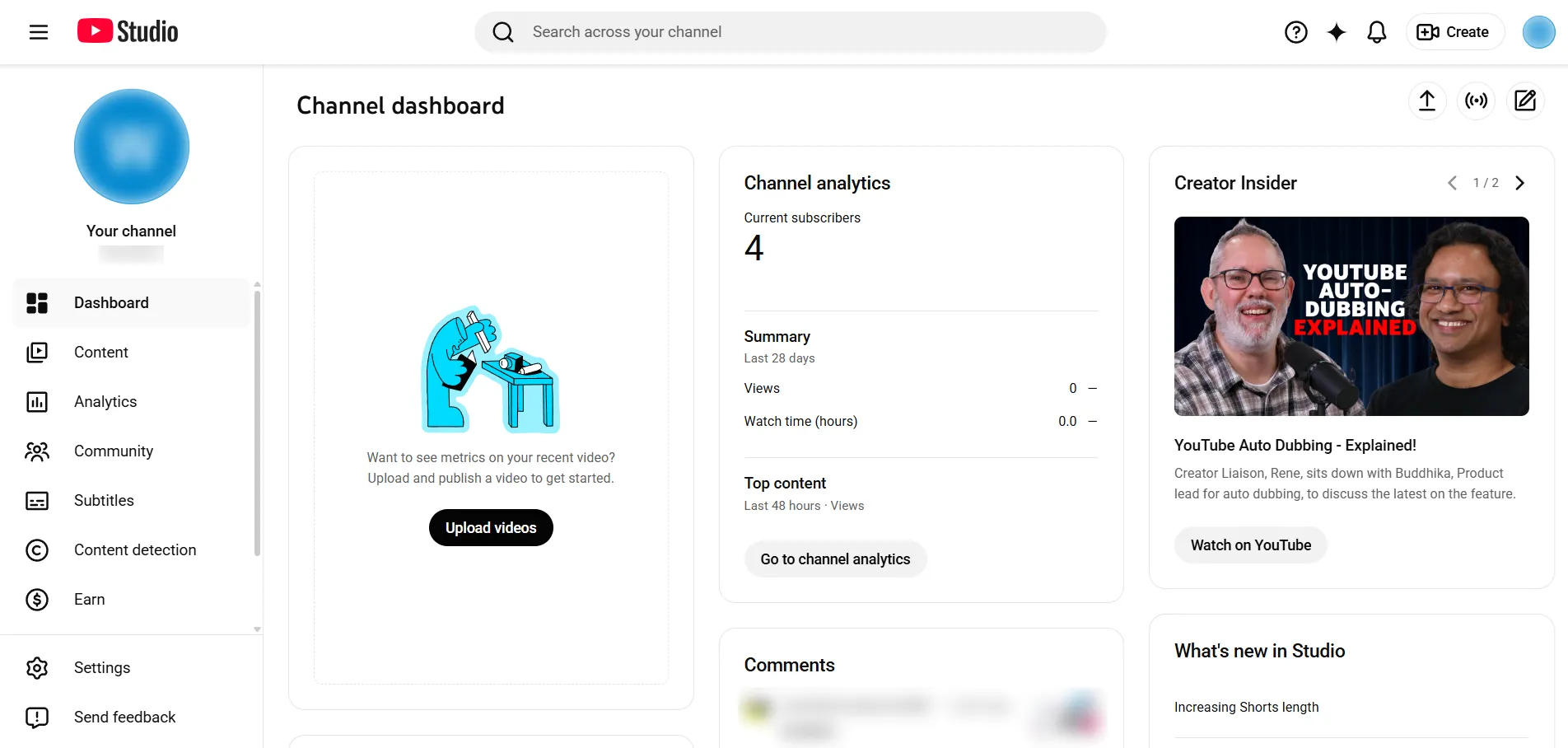
This is the primary dashboard for every creator. It provides essential first party data on audience retention and traffic sources while offering a research tab to identify what your viewers are searching for.
TubeBuddy
This browser extension integrates directly into your dashboard to simplify keyword research. It includes a helpful SEO Studio that guides you through optimizing your titles and descriptions to improve your search rankings.
VidIQ
Focusing heavily on competitive analysis, this tool provides real time data on trending topics. Its unique metrics help you understand which keywords are currently driving the most views for other creators.
Canva
High quality thumbnails are critical for click through rates. Canva provides specialized templates that help you design visually striking thumbnails which signal relevance to the algorithm and encourage more users to click.
Google Trends
This free tool allows you to track the popularity of search terms over time. By filtering for YouTube search, you can identify rising seasonal trends and plan content when interest is highest.
Google Keyword Planner
Originally for advertisers, this tool is excellent for finding high volume search terms. It helps you discover broad keyword ideas and see how often specific phrases are searched across the entire web.
Remember that video optimization works best when integrated with broader search efforts. For deeper insights into how social signals shape rankings, revisit the discussion on how social engagement impacts organic search visibility.
Summary of YouTube SEO Tips
YouTube optimization is a layered process that combines keyword research, metadata refinement, engagement strategies, and audience retention improvements. From identifying the right YouTube SEO keywords to improving watch time and leveraging playlists, every step contributes to stronger visibility.
When applied consistently, YouTube for SEO becomes a powerful traffic engine. It not only improves video rankings but also strengthens brand authority, increases website visits, and supports your broader digital marketing ecosystem.