

SEO for small business is one of the most practical ways to attract consistent customers without depending entirely on paid advertising. When someone searches for a service you offer, your visibility in those results determines whether you get the inquiry or your competitor does.
Search engine optimization is the process of improving your website so search engines understand it, trust it, and show it to the right audience. For smaller companies, this means focusing on the searches that matter most, especially local and high-intent queries.
For businesses looking to explore a complete approach to online growth, see Digital Marketing for Small Business: A Complete Guide to Online Growth, which covers actionable strategies for promoting your small business across multiple digital channels.
Large brands often dominate broad keywords because they have strong domain authority, larger marketing budgets, and established recognition. Smaller businesses do not have that advantage. What they do have is flexibility, niche focus, and the ability to build relevance in specific markets. With the right structure and consistent execution, it is entirely possible to compete.
Many businesses choose to invest in quality SEO services to accelerate results and avoid technical errors. Others manage optimization internally. Either approach can work, but both require a clear strategy, realistic expectations, and ongoing effort.
This beginner’s guide explains how search optimization works, why it matters, and how to apply practical small business SEO strategies step by step. The goal is not theory. The goal is measurable growth.
What Is SEO for Small Business?
Search engine optimization is the practice of improving a website so it ranks higher in organic search results for relevant queries. For small businesses, the objective is straightforward: appear in front of potential customers when they are actively searching for related products or services.
Unlike enterprise-level campaigns that may target national or global audiences, smaller companies usually focus on specific service areas and niche offerings. That changes the approach. Instead of trying to rank for highly competitive broad keywords, a local business might prioritize city-based searches or specialized service terms.
Organic search differs from paid advertising in both structure and sustainability. Paid ads provide immediate placement but require continuous spending. Once the budget stops, traffic disappears. Organic rankings take longer to build, but they can produce ongoing traffic with lower long-term costs.
The real value of search optimization lies in accumulation. Over time, strong content, technical stability, consistent citations, and backlinks build authority. That authority makes future rankings easier to achieve and reduces reliance on paid campaigns.
Why SEO Matters for Small Businesses
Search visibility directly affects lead flow and revenue. The benefits below explain why optimization remains essential for smaller companies.
1. Increases Online Visibility
Most users do not scroll past the first page of search results. If your business does not appear there, your exposure is limited. Ranking in Google Search and Google Maps increases the likelihood that potential customers discover your brand. Higher placement improves click-through rates and keeps your business visible during critical decision-making moments.
2. Drives High-Intent Traffic
Search traffic often includes users ready to act. Queries like “emergency electrician near me” or “accountant for small business in Bangalore” show immediate intent. Ranking for these searches connects you with prospects who are already looking for a solution. Local intent further increases conversion probability because proximity influences purchasing decisions.
3. Builds Credibility and Trust
Strong rankings signal relevance. When users repeatedly see your business in search results, trust develops naturally. Reviews, accurate listings, and informative content reinforce that credibility. Over time, consistent presence creates familiarity, which makes customers more confident in choosing your services over competitors.
4. Delivers Cost-Effective Marketing
Investing in SEO is surprisingly affordable for smaller companies. Small business SEO cost is generally low compared to ongoing paid advertising, yet it delivers lasting results. Once your pages rank, they continue attracting traffic and leads without extra spending, making search marketing a highly cost-effective strategy for sustainable growth.

5. Competes with Larger Brands
Small businesses rarely win broad national keywords. However, they can dominate niche and local searches. By focusing on specialized services and specific geographic terms, smaller companies can position themselves as the most relevant option within their market.
Small Business SEO Strategies
Effective growth requires structured execution. The following small business SEO strategies provide a practical roadmap.
1. Keyword Research for Small Business SEO
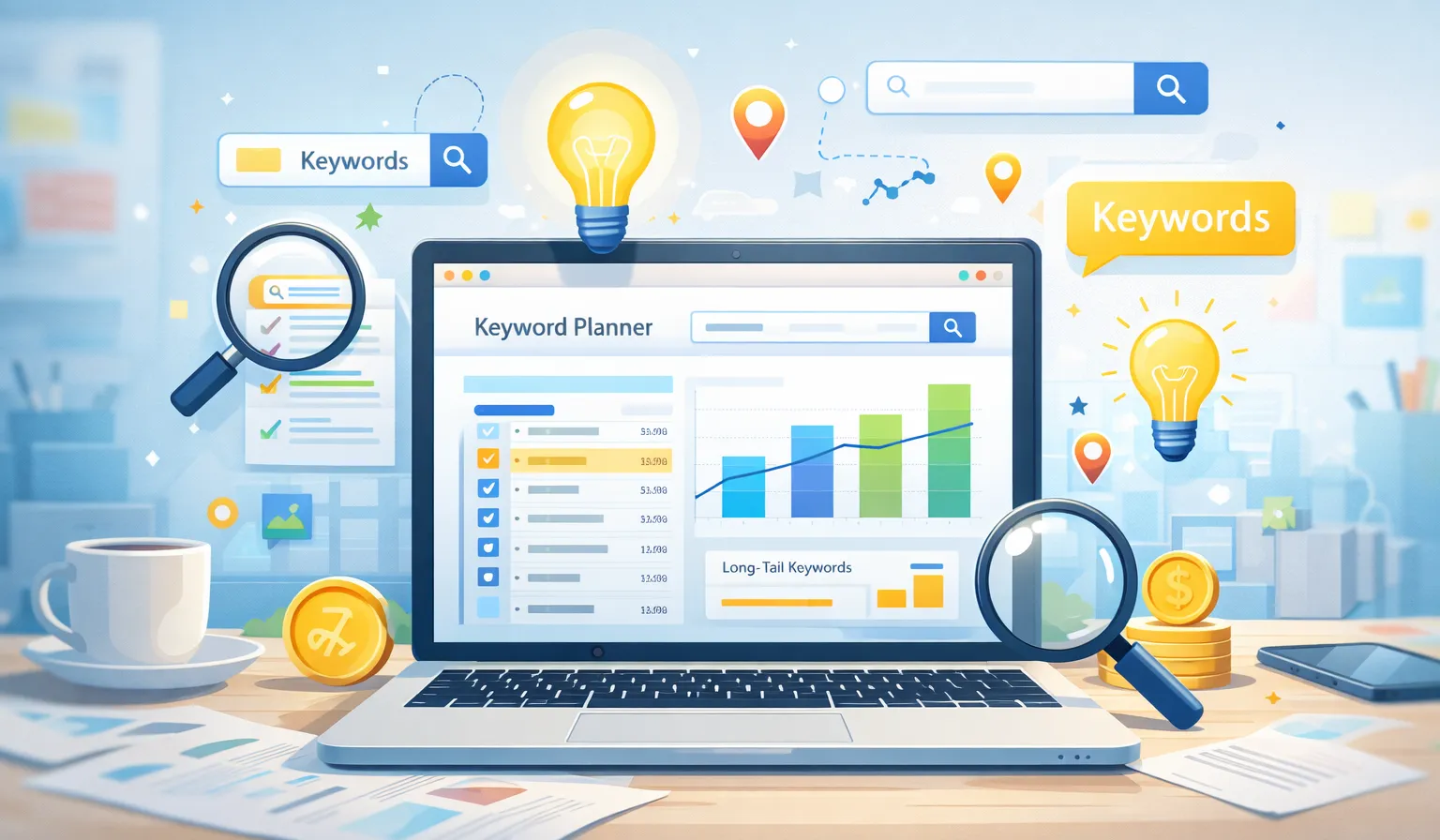
Keyword research determines whether your website attracts qualified prospects or irrelevant traffic. Tools like Google Keyword Planner provide insights into search volume, competition, and related queries, making it easier to identify terms your potential customers actually use. The right keywords connect your services to people actively searching for them.
Understanding Search Intent
Search intent explains why someone performs a search. Most queries fall into four main categories:
- Informational Intent: This is when someone wants to understand a topic, solve a problem, or gather knowledge before making any decision. The goal is learning, not buying.
Example: “how to register a small business in India” - Navigational Intent: The user already knows the brand or website they want and is using search to reach it quickly. They are not comparing options; they are trying to locate a specific destination.
Example: “Infosys official website” - Commercial Intent: In this stage, the user is evaluating providers, services, or products before choosing one. They are interested in buying but are comparing quality, pricing, reviews, or reputation.
Example: “best digital marketing agency in Mumbai” - Transactional Intent: This reflects immediate action. The user has already decided what they need and is searching for a provider to hire or a service to book.
Example: “hire CA in Bangalore”
Small businesses should prioritize commercial and transactional searches because these users are closer to becoming customers. Informational content should support service pages by educating users and guiding them toward action. When intent matches the purpose of the page, conversions increase naturally.
Local Keywords vs Broad Keywords
Broad keywords are highly competitive and usually dominated by established brands. For example, ranking for “accountant” nationwide is unrealistic for a small firm.
Adding geographic modifiers narrows the competition:
- “tax accountant in Delhi”
- “family lawyer in Mumbai”
Local keywords reduce competition and increase relevance. Search engines prioritize proximity in many service-based queries. That creates an advantage for businesses that clearly define service areas within their content.
For most local companies, geographic specificity should anchor the keyword strategy.
Long-Tail Keywords
Long-tail keywords are more detailed phrases with lower search volume but clearer intent. Examples include:
- “same-day AC repair in Mumbai”
- “affordable wedding photographer in Kochi”
These searches often reflect urgency or specific needs. Because fewer websites target them directly, ranking becomes more achievable. Over time, accumulating multiple long-tail rankings produces meaningful traffic.
Instead of chasing one competitive term, build authority across many specific queries.
Competitor Keyword Analysis
Competitor research reveals gaps and opportunities. Study businesses ranking above you and analyze:
- Which pages generate traffic
- What topics they cover
- Which keywords they prioritize
- Where they lack depth
The goal is not imitation. It is strategic positioning. If competitors ignore certain services or neighborhoods, those become entry points. If they dominate a topic, you must determine whether differentiation or deeper coverage is possible.
Keyword strategy should be informed by the competitive landscape, not guesswork.
2. On-Page SEO Optimization
On-page optimization ensures search engines understand what each page represents. Even strong keywords cannot rank if the page structure is unclear or poorly organized.
Optimize Title Tags and Meta Descriptions
Title tags are a direct ranking signal. Each page should have a clear, descriptive title that reflects the main topic. It must read naturally and accurately describe the content.
Meta descriptions influence click-through rates. They should summarize value, not repeat keywords mechanically. A clear description improves user engagement even if rankings stay constant.
Use Proper Heading Structure
Headings create hierarchy. Each page should include one primary H1 and structured H2 and H3 elements beneath it. This format helps search engines interpret content flow and helps readers scan quickly.
Poor heading structure leads to confusion. Logical organization improves readability and increases time on page, which indirectly supports performance.
Optimize URLs
URLs should be short, descriptive, and easy to interpret. Avoid unnecessary parameters or numbers.
A clean structure such as:
yourwebsite.com/emergency-roof-repair-chicago
is clearer than:
yourwebsite.com/page?id=4827
Descriptive URLs improve user trust and make indexing easier.
Internal Linking Strategy
Internal links distribute authority across your site. A blog post discussing seasonal maintenance should link to the corresponding service page. Service pages should link to related resources.
Strategic internal linking helps search engines discover content and understand topical relationships. It also guides users toward conversion pages. Without internal structure, content becomes isolated.
Image Optimization
Images should be compressed for performance and include descriptive alt text. Alt text improves accessibility and provides additional context for search engines.
Large image files slow page speed, which affects both rankings and user experience. Optimization is not cosmetic; it is functional.
Content Readability and Structure
Content must be clear, direct, and logically arranged. Short paragraphs, defined sections, and natural language improve comprehension.
Search engines measure engagement metrics. If users leave quickly, rankings decline over time. Readability is not aesthetic preference. It is performance-related.
3. Local SEO for Small Businesses
For service-based companies, local visibility often determines survival. Many searches imply local intent even without city names.
Google Business Profile Optimization
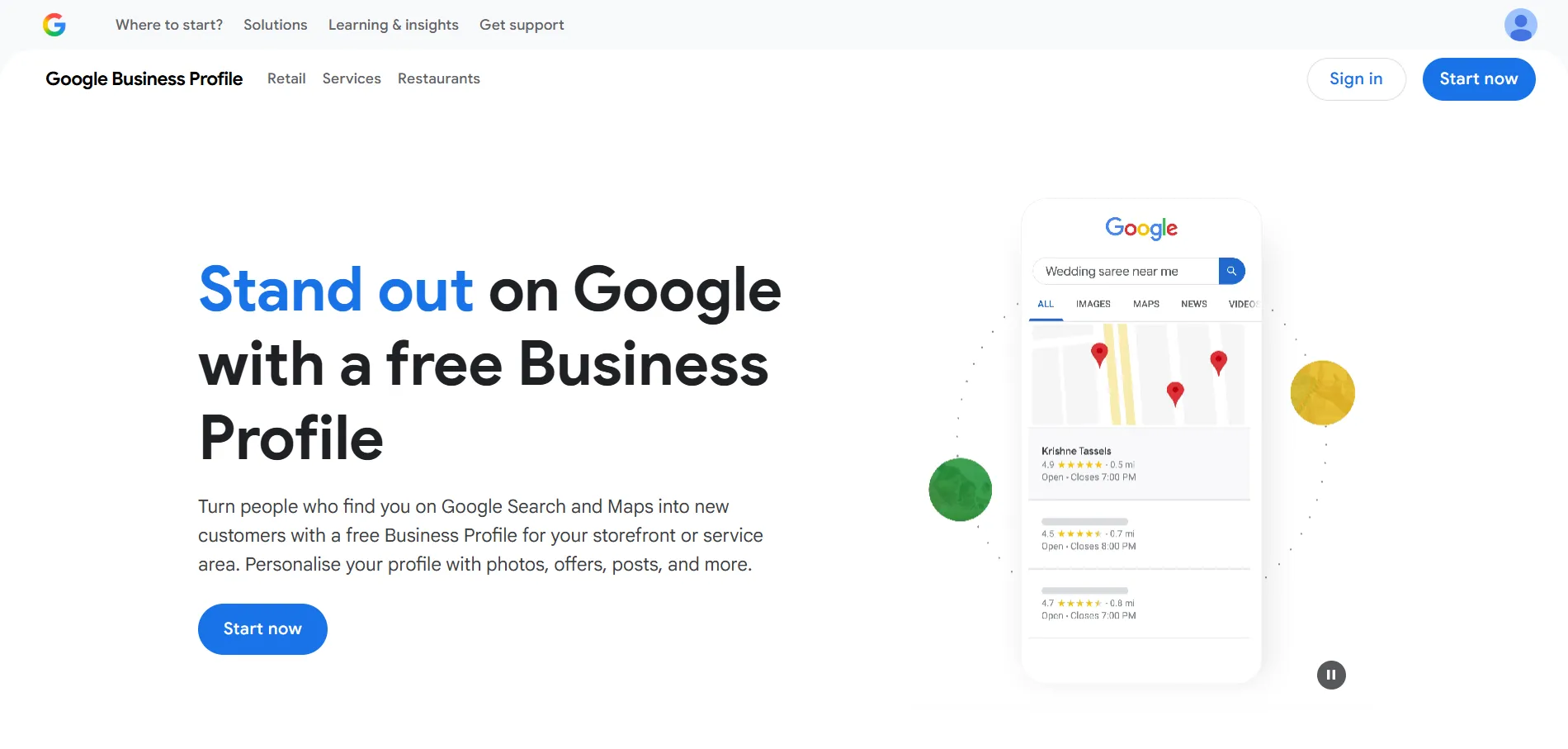
A properly optimized Google Business Profile increases visibility in Maps and local pack results.
- Complete Profile Setup: Accurate name, address, phone number, website, business hours, and service descriptions are foundational. Incomplete profiles rank poorly and reduce trust.
- Categories and Services: Choosing the correct primary category significantly influences which searches trigger your listing. Secondary categories refine relevance. Services should be clearly defined rather than generic. Precision improves visibility.
- Photos and Updates: Uploading real photos of your team, office, or completed projects builds credibility. Regular updates signal activity and engagement. Inactive profiles appear neglected.
Local Citations and Directories
Citations on platforms like Yelp, Bing Places, and industry directories reinforce legitimacy. Search engines cross-reference this data to confirm business existence. Quality matters more than quantity. Focus on reputable directories relevant to your industry.
NAP Consistency
Name, Address, and Phone number must match exactly across all platforms. Even small inconsistencies can reduce trust signals. Consistency supports ranking stability.
Managing Customer Reviews
Reviews influence both search visibility and conversion rates. Encourage satisfied clients to leave feedback. Respond professionally to all reviews, including negative ones. Active management signals credibility and improves engagement.
Local Landing Pages
Businesses serving multiple locations should create dedicated pages for each area. Each page must contain unique content relevant to that location. Duplicating the same text with only city names changed weakens performance. Local relevance must be genuine.
4. Content Marketing for Small Business Growth
Content supports visibility across informational and commercial searches. It establishes authority and expands keyword reach.
Blogging Strategy
A blog should answer real customer questions. Identify recurring inquiries and turn them into detailed articles.
Consistent publishing builds topical authority. Random, unrelated posts dilute focus. Strategic blogging supports service rankings.
Service Pages Optimization
Each core service should have its own comprehensive page. These pages should explain the service, outline benefits, address objections, and include calls to action. Thin service pages rarely rank well because they lack depth.
Location-Based Content
Location-specific content strengthens geographic relevance. This includes community involvement, case studies, and local event participation. Search engines reward contextual signals tied to place.
FAQs and Schema Markup
Frequently asked questions improve clarity and increase keyword variation naturally. Structured data markup helps search engines interpret that information more effectively. Clear answers reduce friction in the buying process.
Educational and Helpful Content
Educational resources build trust over time. Guides, comparisons, and practical advice position your business as a knowledgeable authority. Trust influences both rankings and conversions.
5. Technical SEO Essentials
Technical health supports all other optimization efforts. Without it, rankings remain unstable.
Website Speed Optimization
Slow loading times increase bounce rates. Compress images, minimize scripts, and use caching to improve speed. Performance directly affects user satisfaction and ranking signals.
Mobile-Friendliness
Most searches occur on mobile devices. Responsive design is essential. Navigation, buttons, and forms must function smoothly on smaller screens. Poor mobile usability damages credibility.
Secure HTTPS
HTTPS encryption protects user data and builds trust. Search engines prioritize secure websites. Security is a baseline requirement.
Fixing Broken Links
Broken links disrupt user experience and waste crawl budget. Regular audits ensure all pages remain accessible. Maintenance prevents gradual ranking decline.
XML Sitemap and Robots.txt
An XML sitemap guides search engines to important pages. Robots.txt controls crawl access. Proper configuration ensures efficient indexing.
Structured Data
Structured data clarifies page elements such as services, reviews, and business details. It enhances understanding and may improve result presentation. Technical clarity improves visibility.
6. Link Building for Small Businesses
Authority signals remain central to rankings. Links from relevant, trustworthy websites act as endorsements.
Local Partnerships
Collaborating with local organizations, charities, or business associations often results in natural backlinks. These links are geographically relevant and highly valuable. Community involvement strengthens both brand and rankings.
Guest Posting
Contributing articles to reputable industry websites builds authority and exposure. Content must provide genuine value, not promotional filler. Quality placements outweigh volume.
Business Directories
Submitting to respected industry directories builds foundational authority. Avoid low-quality link farms, as they can harm performance. Relevance matters more than numbers.
Digital PR
Press releases, case studies, and community initiatives can attract media attention. Coverage from trusted publications builds strong authority signals. Strategic storytelling creates link opportunities.
Earning Natural Backlinks
High-quality content attracts links over time. Detailed guides, research insights, and unique resources perform best. Authority is built gradually through consistency.
Small Business SEO Tools
Reliable small business SEO tools simplify tracking and optimization:
- Google Search Console: Helps monitor indexing issues and track keyword performance.
- Google Analytics: Tracks visitor behavior, traffic sources, and conversions.
- Google Business Profile: Manages local visibility, reviews, and Google Maps presence.
- SEMrush: Supports competitive research, keyword analysis, and SEO audits.
- Ahrefs: Provides backlink data, content insights, and competitor monitoring.
- Moz Pro: Offers rank tracking, site audits, and keyword research tools.
- Ubersuggest: Assists with keyword suggestions, search volume, and traffic estimates.
Using these tools consistently allows small businesses to make data-driven SEO decisions rather than relying on assumptions.
To maximize your online growth, SEO works best when combined with other digital marketing channels. Learn more about how to build a complete online marketing strategy for your small business to attract more customers and grow your brand.
Closing Thoughts on SEO for Small Business
Search visibility is built over time through consistent effort, structured planning, and technical precision. By focusing on relevant keywords, publishing helpful content, and maintaining strong technical foundations, small businesses can compete effectively in crowded markets.
Start with manageable steps, implement improvements gradually, and monitor your results. Growth may not happen overnight, but steady refinement produces lasting impact. When approached thoughtfully and strategically, SEO for small business becomes a reliable driver of sustainable online success.