

Digital marketing services in Bangalore have become essential for small businesses aiming to grow in a competitive, technology-driven environment. Reliable SEO services in Bangalore, social media marketing, content marketing, and PPC advertising are among the key solutions helping businesses gain online visibility and attract local customers.
The city has developed into one of India’s most dynamic digital economies, where startups, local brands, and service providers compete for online attention. As more customers search for products and services online, small businesses must adopt modern marketing approaches to stay relevant and competitive.
Traditional advertising methods alone are no longer enough, and many businesses are shifting toward digital channels such as search engines, social media platforms, and targeted campaigns. Strong online visibility, effective local search presence, and well-planned strategies help businesses reach the right audience at the right time. This guide explains the benefits, key services, and important factors to consider when choosing the right digital marketing support.
Benefits of Digital Marketing Services for Small Businesses
Before exploring the different strategies, it is important to understand the advantages that businesses can gain. The major benefits of digital marketing services are explained below.
1. Increased Online Visibility
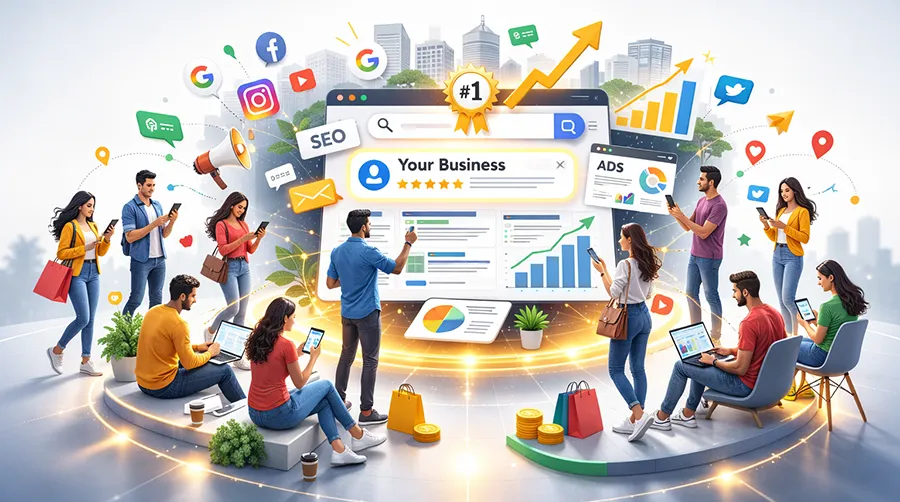
One of the biggest benefits of digital marketing is improved visibility. When potential customers search for products or services online, businesses that appear in search results are more likely to attract attention. Through search engine optimization, local listings, and social media activity, companies can ensure their brand appears where customers are already looking.
For small businesses, visibility is often the difference between steady growth and struggling to attract customers. Appearing in search results, maps listings, and social media feeds increases the chances of being discovered by people who are ready to purchase.
2. Cost-Effective Marketing
Compared to traditional advertising methods such as television or print ads, digital marketing allows businesses to control their budget more effectively. Small businesses can start with smaller campaigns and scale gradually as they see results.
For example, targeted campaigns ensure that ads reach people who are more likely to be interested in the service. This reduces unnecessary spending and increases the chances of conversions.
Additionally, many digital strategies such as content marketing and search engine optimization provide long-term value. Once optimized, a website or blog can continue generating traffic without ongoing advertising costs.
3. Targeted Audience Reach
Another major advantage is the ability to target specific audiences. Businesses can focus on people based on location, interests, behavior, and demographics. This is especially helpful for local businesses trying to attract customers within a specific area.
Instead of promoting services to a broad audience, digital marketing allows businesses to reach customers who are actively searching for relevant solutions. This improves the overall effectiveness of marketing campaigns.
4. Measurable Results and Analytics
One of the reasons many businesses prefer digital marketing is the ability to measure performance. Analytics tools allow companies to track website traffic, engagement, leads, and conversions.
This data helps businesses understand what is working and what needs improvement. By analyzing campaign performance, marketing strategies can be adjusted to deliver better results over time.
Clear insights also help business owners make smarter decisions about their marketing investments.
5. Stronger Brand Awareness
Consistent online presence helps businesses build recognition and trust. When customers repeatedly see a brand through search results, social media content, and helpful information, they are more likely to remember it.
Brand awareness is particularly important for small businesses that want to establish credibility in a competitive market. Over time, this familiarity leads to stronger customer relationships.
6. Better Customer Engagement
Digital platforms allow businesses to communicate directly with their audience. Through social media, email newsletters, and informative content, businesses can interact with customers in meaningful ways.
Engagement builds trust and encourages loyalty. When customers feel connected to a brand, they are more likely to return and recommend the business to others.
Key Digital Marketing Services in Bangalore
Digital marketing services in Bangalore help small businesses build online visibility, attract local customers, and compete in a highly digital business environment in Bangalore. Companies today rely on a mix of search marketing, paid advertising, content strategies, and social media to reach their audience effectively. The key digital marketing services that support business growth are explained in detail below.
1. Search Engine Optimization (SEO)
Search Engine Optimization is one of the most important strategies for businesses that want to improve their search engine rankings and attract consistent organic traffic. Many companies choose to work with reputed SEO experts in Bangalore to build a strong search presence and implement effective optimization strategies.
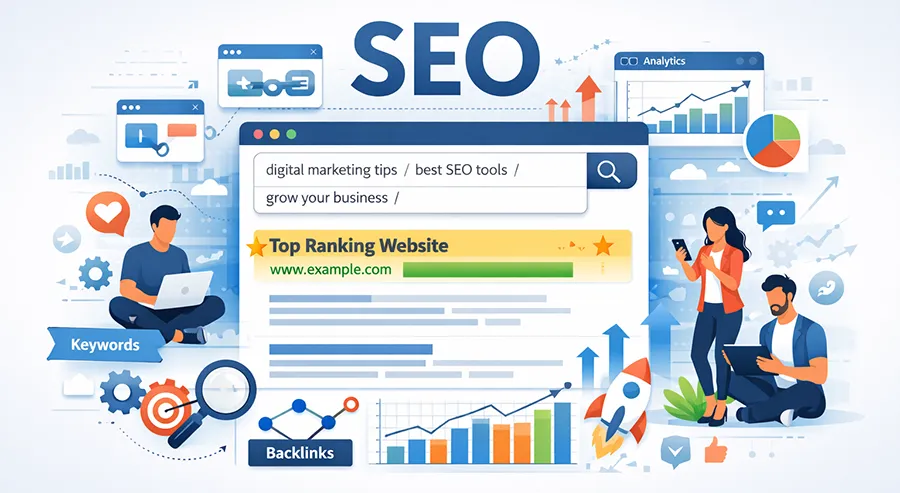
Local SEO is particularly important for businesses that want to reach customers within Bangalore and nearby areas.
- Keyword research and search intent analysis: Businesses identify the search terms potential customers use when looking for products or services online. This research helps target keywords that bring relevant traffic and improve the chances of ranking higher in search results.
- On-page optimization: This involves improving page titles, meta descriptions, headings, internal linking, and content structure so search engines can clearly understand each page. Proper on-page optimization also improves readability and user experience for visitors.
- Local SEO optimization: Businesses optimize their presence for location-based searches such as “services in Bangalore” or “near me.” This includes improving business listings, maintaining consistent contact information, and strengthening visibility in local search results.
- Technical SEO improvements: Technical optimization focuses on improving website speed, mobile responsiveness, and site architecture. A technically optimized website helps search engines crawl and index pages efficiently.
- Link building and authority development: Businesses earn backlinks from credible websites, directories, and industry platforms. Strong backlinks signal trust and relevance to search engines, helping improve rankings over time.
- Performance tracking and SEO improvements: SEO campaigns are monitored using analytics tools to track keyword rankings, traffic growth, and user behavior. Based on performance data, strategies are refined to achieve better long-term results.
2. Pay-Per-Click Advertising (PPC)
Pay-per-click advertising helps businesses gain immediate visibility on search engines by displaying ads to users searching for specific services. This strategy allows companies to reach potential customers quickly while maintaining control over advertising budgets and targeting settings.
PPC campaigns are particularly useful for businesses that want fast results while building their long-term organic presence. When managed effectively, PPC can generate consistent leads and improve brand awareness.
- Keyword targeting and campaign planning: Businesses research and select search terms that indicate strong customer intent. Careful planning ensures that ads appear for searches that are relevant to the services offered.
- Ad creation and messaging: This focuses on writing compelling advertisements that highlight key benefits and encourage users to click. Clear messaging improves ad performance and increases the likelihood of attracting interested customers.
- Landing page alignment: This ensures that users who click on an advertisement arrive on a page that matches their expectations and provides useful information. A well-designed landing page improves conversion rates and keeps visitors engaged.
- Campaign monitoring and optimization: This involves reviewing campaign data regularly to identify what is working and what needs improvement. Adjusting bids, keywords, and ad messaging helps improve performance over time.
Google Ads campaigns are commonly used for PPC because they allow businesses to appear at the top of search results. Local paid search campaigns also help businesses target customers within specific geographic areas, increasing the chances of attracting nearby leads.
3. Social Media Marketing
Social media marketing focuses on building brand awareness and connecting with audiences through platforms where people spend a significant amount of time. For small businesses, it provides an opportunity to communicate directly with customers, share updates, and build a recognizable brand presence.
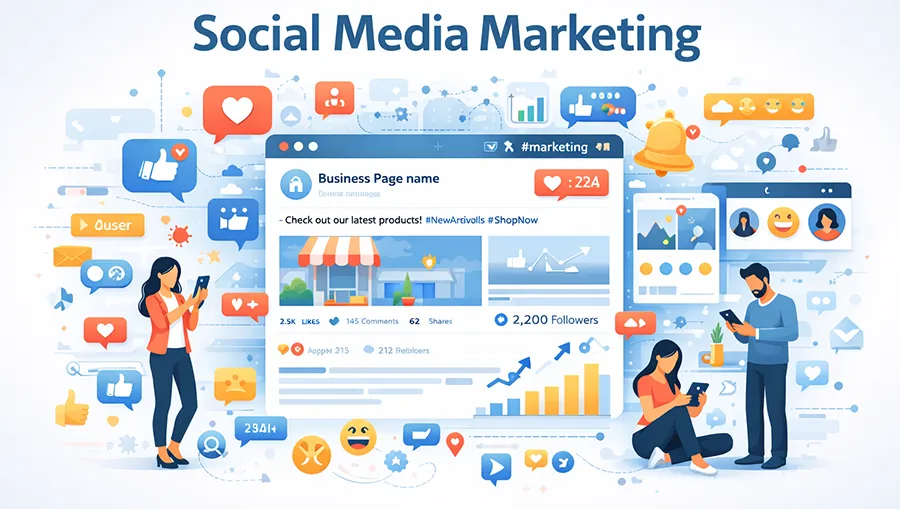
A well-planned social media strategy involves more than occasional posting. It requires consistent content, engagement with followers, and an understanding of audience preferences.
- Content planning and scheduling: Businesses create a structured plan that outlines what type of content will be shared and when it will be posted. Consistent posting helps maintain visibility and keeps the audience engaged over time.
- Visual content development: This includes creating graphics, images, and short videos that make posts more engaging and easier to understand. High-quality visuals often attract more attention and encourage users to interact with the content.
- Audience interaction and engagement: Responding to comments, messages, and discussions helps build trust with followers. Active engagement also signals to platform algorithms that the content is valuable.
- Paid social promotions: Businesses use targeted advertising to reach specific demographics and expand their audience. These campaigns help increase brand exposure and drive traffic to websites or landing pages.
Over time, social media marketing strengthens relationships with customers and keeps the business visible in a competitive digital environment.
4. Content Marketing
Content marketing focuses on creating valuable information that helps customers understand services and make informed decisions. Instead of focusing solely on promotion, this strategy provides useful insights that attract visitors and build trust.
Businesses that invest in content marketing often establish themselves as reliable sources of information within their industry. This credibility can influence customers when they are choosing a service provider.
- Topic research and planning: Businesses identify subjects that their audience frequently searches for or finds useful. Careful topic selection ensures that the content addresses real customer needs.
- Long-form articles and guides: Detailed articles allow businesses to explain topics thoroughly and demonstrate expertise. These resources often perform well in search results because they provide comprehensive information.
- Search-focused content structure: Content is organized using headings, sections, and clear formatting so that both readers and search engines can understand it easily. Proper structure also improves readability and user experience.
- Content updates and expansion: Existing content is reviewed and improved regularly to keep it accurate and relevant. Updating content can also help maintain strong search rankings over time.
Content marketing supports other digital strategies and helps businesses build long-term online authority.
5. Video Marketing
Video marketing helps businesses communicate ideas quickly and effectively through visual storytelling. Many customers prefer video content because it simplifies complex information and keeps their attention longer.
Videos can explain services, demonstrate processes, and showcase the human side of a business. When viewers connect emotionally with a brand, they are more likely to trust it.
- Service explanation videos: These videos show how a service works and what customers can expect. Clear explanations help viewers understand the value offered by the business.
- Customer testimonial videos: Real customer experiences create trust and provide social proof for potential clients. Hearing positive feedback from others can strongly influence decision-making.
- Educational videos: These videos provide helpful insights or tips related to the industry. Informative content builds credibility and positions the business as knowledgeable.
- Brand storytelling videos: These introduce the company’s mission, values, and journey in a relatable way. Strong storytelling helps businesses stand out and build a memorable identity.
Video marketing can be used across websites, advertisements, and social platforms to increase engagement and reach.
6. Influencer Marketing
Influencer marketing involves collaborating with individuals who have built a loyal audience and strong credibility within a specific niche. Their followers often trust their opinions, which makes influencer recommendations impactful.
For small businesses, working with influencers can introduce the brand to new audiences who may not have discovered it through traditional advertising.
- Influencer selection and research: Businesses identify influencers whose audience matches their target customers. Choosing the right partner ensures that campaigns reach relevant people.
- Collaborative campaign planning: Brands and influencers work together to create content that feels authentic and engaging. Well-planned collaborations help maintain trust with the audience.
- Content promotion through influencers: Influencers share their experiences with a service or product in a natural and relatable way. Authentic promotion often generates stronger engagement than traditional ads.
- Performance evaluation and insights: Businesses review engagement metrics, audience reach, and campaign outcomes. These insights help refine future influencer partnerships.
Influencer marketing can significantly improve brand visibility when partnerships are aligned with the brand’s identity.
7. Website Design
Website design forms the foundation of any digital marketing strategy because most marketing efforts eventually direct visitors to a website. A poorly designed site can discourage visitors, while a well-designed one encourages them to explore and take action.
A professional website should be visually appealing, easy to navigate, and optimized for performance across devices. It should clearly communicate what the business offers and guide visitors toward contacting the company.
- User-friendly structure and navigation: Websites should be organized in a way that helps visitors find information quickly. Clear navigation menus and logical page layouts improve the browsing experience.
- Mobile-friendly design: Many users access websites through smartphones, so responsive design is essential. A mobile-optimized site ensures content is readable and functional on smaller screens.
- Website speed and performance optimization: Fast loading times reduce the chances of visitors leaving the site prematurely. Performance improvements also contribute to better search engine rankings.
- Conversion-focused design elements: Contact forms, call-to-action buttons, and clear service descriptions encourage visitors to take the next step. These elements help turn website visitors into leads or customers.
A well-designed website strengthens the effectiveness of all digital marketing efforts.
8. Email Marketing
Email marketing remains one of the most reliable ways for businesses to maintain direct communication with their audience. It allows companies to send updates, valuable information, and promotional messages to people who have already shown interest in their services.
Because email communication is direct and personalized, it often results in stronger engagement compared to many other marketing channels.
- Subscriber list development: Businesses collect email addresses through website forms, newsletter sign-ups, or service inquiries. Building a permission-based list ensures that communication reaches people who are genuinely interested.
- Personalized email campaigns: Messages are tailored based on customer interests, previous interactions, or service inquiries. Personalization helps emails feel more relevant and increases engagement.
- Educational newsletters and updates: Regular emails can provide useful insights, company updates, and helpful information that keeps subscribers informed. Consistent communication helps maintain a strong connection with the audience.
- Performance tracking and improvement: Businesses analyze metrics such as open rates, click-through rates, and responses to understand how campaigns perform. These insights help refine email strategies and improve future campaigns.
When used consistently, email marketing supports long-term customer relationships and encourages repeat engagement with the business. It also contributes to the overall success of digital marketing.Top of FormBottom of Form
Tips to Hire the Right Digital Marketing Service Providers in Bangalore
Choosing a reliable marketing partner is important for businesses planning to grow online. Many professionals and service providers offer digital marketing in Bangalore, but selecting the right expert requires careful evaluation. Businesses should focus on experience, strategy, transparency, and results before making a decision. The tips below can help identify a suitable service provider.
1. Evaluate Experience and Industry Knowledge
Businesses should prioritize professionals who have strong experience working with companies in similar industries. Experts familiar with local digital trends and business environments often create more effective campaigns. Bangalore’s technology-driven ecosystem, supported by initiatives from the Department of Electronics, Information Technology and Biotechnology, makes industry understanding especially valuable.
2. Review Portfolio and Case Studies
Businesses searching for skilled digital marketing experts should review portfolios to understand their work quality and campaign approach. Case studies reveal how professionals solved challenges and delivered measurable results. While evaluating service providers, consider experts who work with businesses across key areas such as Jayanagar, Marathahalli, Whitefield, and Koramangala to understand their local market experience.
3. Check Client Reviews and Testimonials
Client reviews provide insights into the service provider’s reliability, professionalism, and communication quality. Businesses should look for consistent feedback about campaign performance and customer support. Testimonials and online ratings can reveal whether the professional maintains long-term client relationships and delivers results that meet expectations.
4. Understand Their Strategy Approach
A reliable expert should focus on data-driven strategies rather than generic marketing plans. Businesses should ask how campaigns are planned, optimized, and measured over time. Customized strategies based on research, audience insights, and performance analysis usually lead to better outcomes than one-size-fits-all marketing solutions.
5. Transparency in Pricing and Reporting
Clear pricing structures help businesses understand what services they are paying for and how budgets are allocated. Service providers should also provide regular performance reports that explain campaign progress. Transparent communication builds trust and allows businesses to track improvements in traffic, leads, and overall marketing effectiveness.
6. Assess Communication and Support
Strong communication ensures smoother collaboration between businesses and professionals. Companies should choose service providers that respond promptly, provide clear updates, and remain accessible when needed. Professionals working in major business hubs such as International Tech Park Bangalore often manage diverse clients and maintain structured communication processes.
7. Focus on ROI, Not Just Traffic
While website traffic is important, businesses should prioritize professionals who focus on measurable business outcomes. A strong service provider aims to improve conversions, leads, and revenue rather than only increasing visitor numbers. Strategies that focus on return on investment usually produce sustainable and meaningful business growth.
Summary of Digital Marketing Services in Bangalore
Digital marketing has transformed how small businesses attract and engage customers in today’s competitive marketplace. With the right approach, businesses can increase visibility, reach targeted audiences, and build long-term brand credibility online.
From search engine optimization and paid advertising to content creation and social media engagement, each strategy plays a role in strengthening online presence. When combined effectively, these methods help businesses generate consistent leads and maintain steady growth.
Selecting the right marketing partner is equally important. Businesses should focus on agencies that understand their goals, provide transparent communication, and deliver measurable results.
Ultimately, investing in digital marketing services in Bangalore can help small businesses establish a strong online presence and compete successfully in an increasingly digital marketplace.
Frequently Asked Questions
What digital marketing services in Bangalore are best for small businesses?
For small businesses in Bangalore, the most effective services usually include SEO, local SEO, social media marketing, PPC advertising, and content marketing. These strategies help improve online visibility, attract nearby customers, and generate qualified leads while allowing businesses to build brand awareness and long-term growth through consistent digital presence.
How much do digital marketing services cost in Bangalore?
The cost of digital marketing services varies depending on the type of services, campaign complexity, and the experience of the agency. Many providers offer flexible packages designed for small businesses. Pricing often scales based on marketing goals, advertising budgets, and the level of strategy, optimization, and ongoing management required.
How much does SEO cost in Bangalore?
SEO pricing depends on factors such as competition level, target keywords, and the scope of optimization needed. Local SEO campaigns for small businesses typically cost less than large-scale campaigns targeting broader markets. Agencies may offer monthly packages that include optimization, content improvements, technical fixes, and performance monitoring over time. For a detailed breakdown of what affects SEO pricing, see SEO Cost in Bangalore: Factors That Influence Pricing.
How much does Google Ads management cost in Bangalore?
Google Ads management costs usually include both the advertising budget and the agency’s management fee. Agencies may charge a fixed monthly fee or a percentage of the ad spend. The overall cost depends on industry competition, selected keywords, campaign goals, and how aggressively the business wants to reach potential customers.
How long does it take to see results from digital marketing in Bangalore?
The timeline for results depends on the strategy used. SEO often takes several months to show noticeable improvements because it involves gradual ranking growth. Paid advertising campaigns such as PPC and social media ads can produce faster visibility and leads, while content marketing and brand building strategies deliver long-term benefits.
Should small businesses focus on digital marketing services in Bangalore?
Yes, small businesses can benefit greatly from investing in digital marketing because it helps them reach customers who are actively searching online. A well-planned digital strategy improves brand visibility, attracts relevant traffic, and supports steady business growth, especially in a competitive business environment where online presence influences customer decisions.