

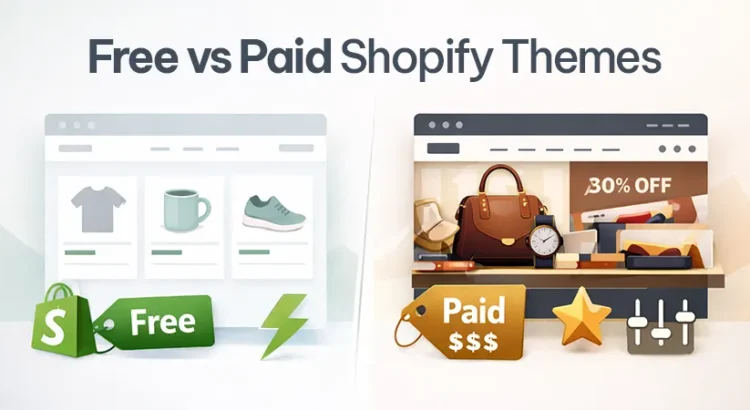
Free vs paid Shopify themes is one of the first decisions business owners face when building an online store. The theme you choose does far more than define how your store looks. It directly influences user experience, trust, conversions, site speed, and long-term scalability. For many merchants, this choice can shape the entire growth trajectory of their ecommerce business.
When setting up a Shopify store, design decisions should never be made in isolation. They are part of a broader foundation that includes product positioning, branding, navigation, and performance. This is why many store owners begin by exploring resources like Shopify Store Setup: The Ultimate Guide for Business Owners early in the process. Understanding the full setup journey helps clarify where theme selection fits into your overall ecommerce strategy.
Shopify offers both free and paid themes, each built for different business stages and goals. While free themes are attractive for new merchants, paid themes often promise advanced functionality and stronger branding potential. This article breaks down free and paid Shopify themes in detail, compares their strengths and limitations, and helps you decide which option aligns best with your store’s current needs and future plans.
What Are Shopify Themes?
Shopify themes are pre-built templates that control the visual design, layout, and structural behavior of your online store. They define how products are displayed, how customers navigate pages, and how content adapts across devices. Every Shopify store runs on a theme, whether customized lightly or heavily.
Beyond aesthetics, themes influence user experience and conversions. Page load speed, mobile responsiveness, product filtering, and checkout flow are all impacted by the theme’s underlying code. A well-structured theme reduces friction for shoppers, builds credibility, and supports higher conversion rates.
Experienced Shopify website developers often emphasize that theme choice affects more than the storefront. It impacts how easily your store can scale, integrate apps, and adopt new Shopify features. Choosing the right theme from the start reduces the need for expensive redesigns later and allows businesses to grow without technical limitations.
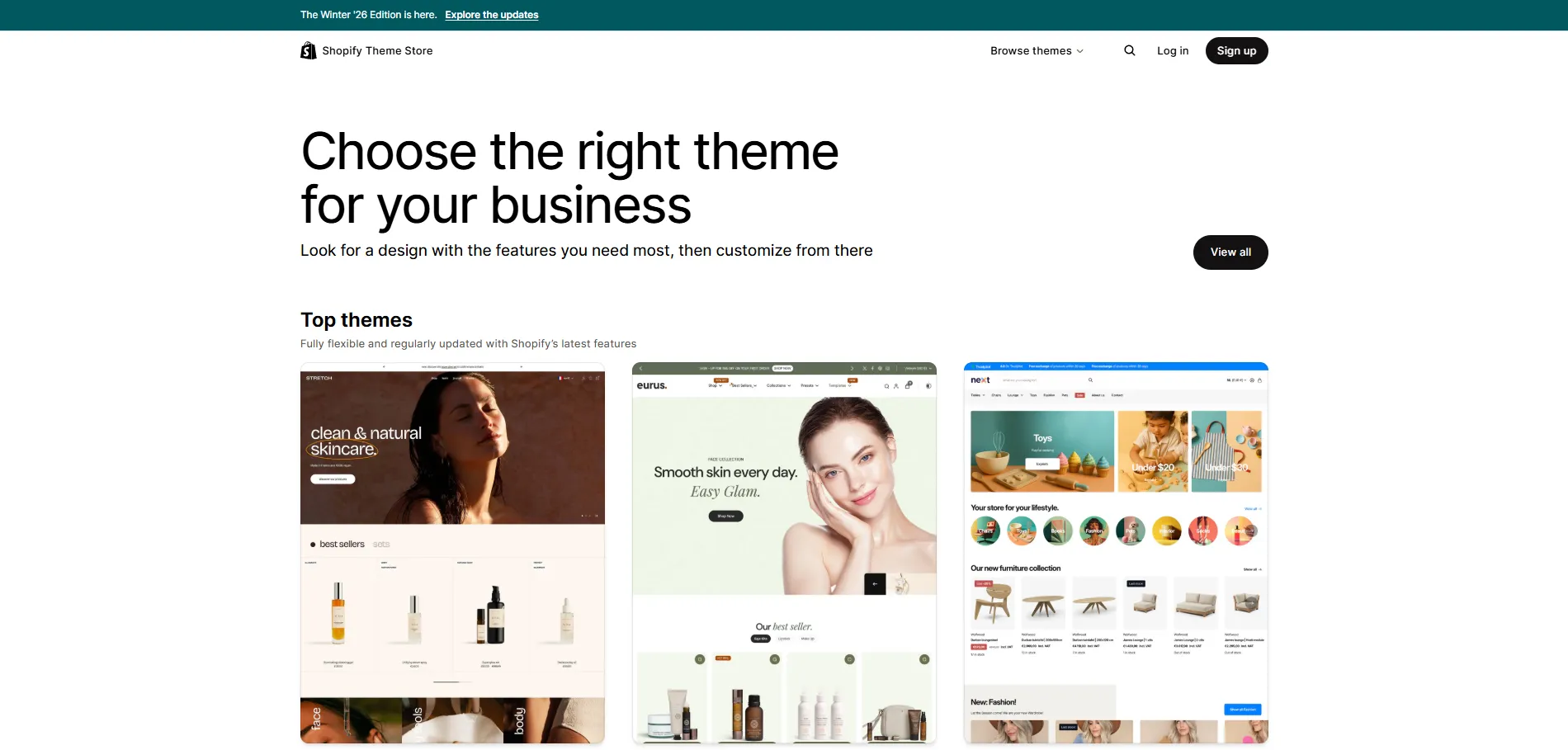
Free Shopify Themes Overview
Free Shopify themes are designed and maintained by Shopify to help merchants launch stores quickly without any upfront investment. They provide a reliable and performance-focused foundation that covers essential ecommerce needs while keeping setup simple. These themes are particularly well-suited for startups, small businesses, and first-time store owners who want to validate their business idea, test products, or establish an online presence without committing to additional costs. For businesses with smaller catalogs or straightforward selling requirements, free themes offer a practical and low-risk starting point.
Pros of Free Shopify Themes
- Zero cost: Allows startups and small businesses to launch an online store without spending on theme development, keeping initial investment low.
- Official Shopify support: Ensures long-term compatibility, regular updates, and reliable assistance directly from Shopify.
- Simple and fast setup: Makes it easy for non-technical users to configure and publish a store quickly.
- Performance-optimized structure: Built with lightweight code that supports fast page load times and smooth browsing.
- Platform stability: Designed to work seamlessly with Shopify updates and new features.
Cons of Free Shopify Themes
- Limited customization: Offers fewer design and layout options, restricting brand differentiation.
- Generic layouts: Results in similar-looking stores, especially within competitive niches.
- Fewer built-in features: Requires third-party apps for advanced marketing, filtering, or conversion tools.
- Basic merchandising capabilities: Provides limited flexibility for complex product presentations.
- Scalability constraints: May feel restrictive as the store grows and requires more advanced functionality.
Most Popular Free Themes
All of the following themes are part of the Shopify OS 2.0 ecosystem. They are built by Shopify and known for being extremely fast and SEO-friendly.
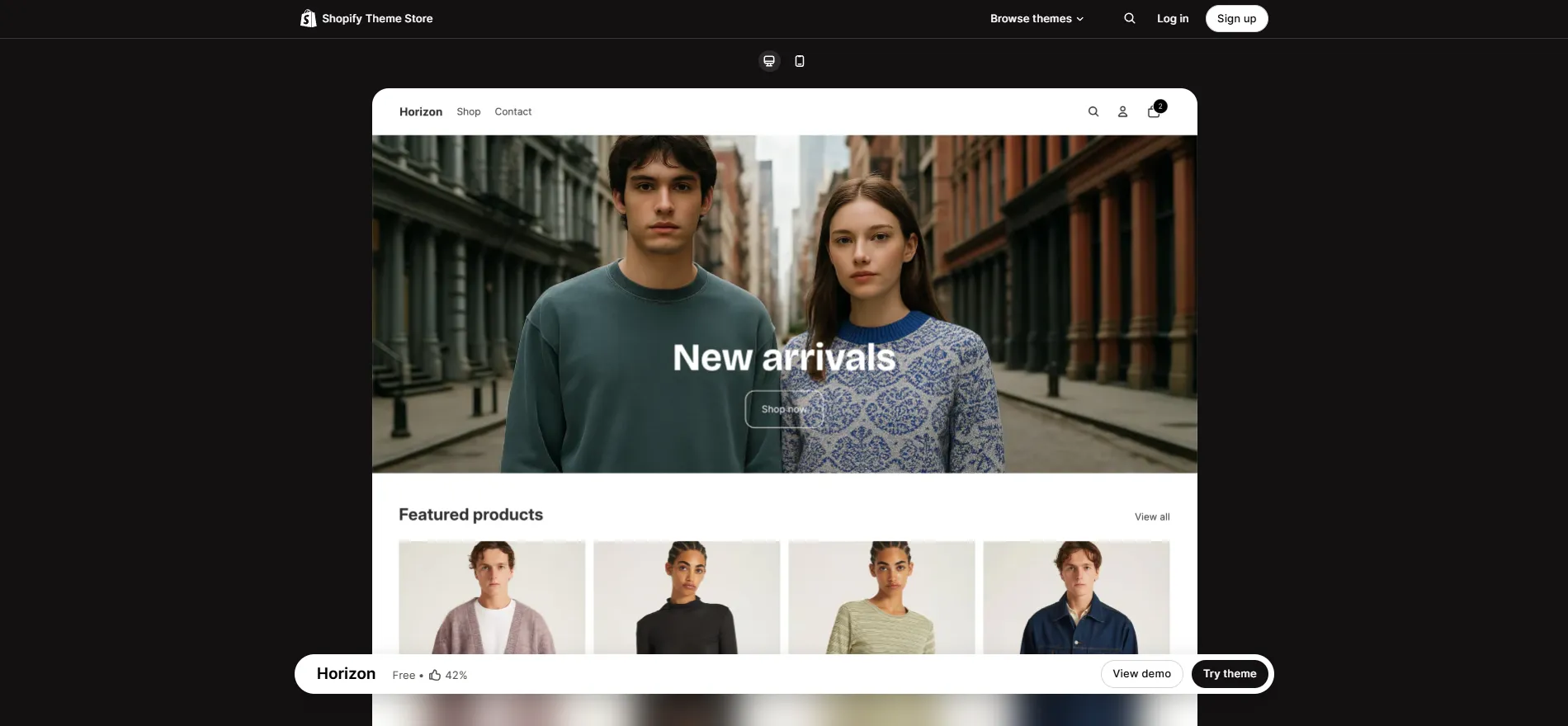
Horizon
Designed with a modern and tech-forward approach, Horizon offers a more feature-rich experience compared to earlier free themes. Often seen as the natural evolution of Dawn, it includes built-in AI blocks and improved mobile layouts, making it ideal for electronics, premium accessories, and digital-first brands.
Dawn
Dawn features a chic, minimalist, and ultra-clean design that puts performance first. It is widely regarded as the gold standard among free Shopify themes, especially for fashion and apparel brands that rely on strong visuals and large imagery to tell their story.
Sense
Sense delivers a soft and approachable aesthetic that works particularly well for health, beauty, and wellness brands. Its layouts are structured to highlight ingredients, product benefits, and usage routines, helping brands educate customers and build trust.
Spotlight
Focused on speed and efficiency, Spotlight strips away unnecessary elements to create a fast, no-frills shopping experience. It is especially effective for social commerce and single-product stores where quick decision-making matters, such as traffic coming from Instagram or TikTok.
Paid Shopify Themes Overview
Paid Shopify themes are professionally designed templates created by experienced theme developers and agencies approved by Shopify. These themes are built for growing and established businesses that need greater design flexibility, stronger branding, and advanced ecommerce functionality.
Premium themes are especially suitable for brands with larger product catalogs, higher traffic volumes, or conversion-focused growth strategies. They are often chosen by businesses that want to reduce reliance on third-party apps and create a more polished, high-performing storefront.
Paid Shopify themes typically fall within a one-time pricing range of approximately $250 to $400. While this is an upfront investment, the cost often replaces multiple paid apps and reduces future redesign expenses.
Pros of Paid Shopify Themes
- Advanced customization: Offers extensive control over layouts, typography, colors, and content sections, allowing brands to create a unique visual identity.
- Conversion-focused layouts: Includes design elements optimized for sales, such as sticky add-to-cart buttons, quick product views, and optimized collection pages.
- Built-in marketing and SEO features: Provides native tools like promotional banners, advanced filtering, structured data support, and content-rich sections without relying on extra apps.
- Dedicated developer support: Comes with detailed documentation, regular updates, and direct assistance from theme developers.
- Scalability: Designed to handle growing product catalogs, complex navigation, and higher traffic volumes smoothly.
Cons of Paid Shopify Themes
- Upfront cost: Requires an initial one-time payment, which may not suit very early-stage businesses or tight budgets.
- Possible feature overload: Includes advanced features that smaller stores may not immediately need, adding complexity during setup.
- Learning curve: More customization options can require additional time to configure properly.
- Overkill for simple stores: May be unnecessary for single-product or very small catalogs.
Most Popular Paid Themes
These themes generally cost between $250 and $400. They are popular because they include built-in features that would otherwise require multiple paid apps.
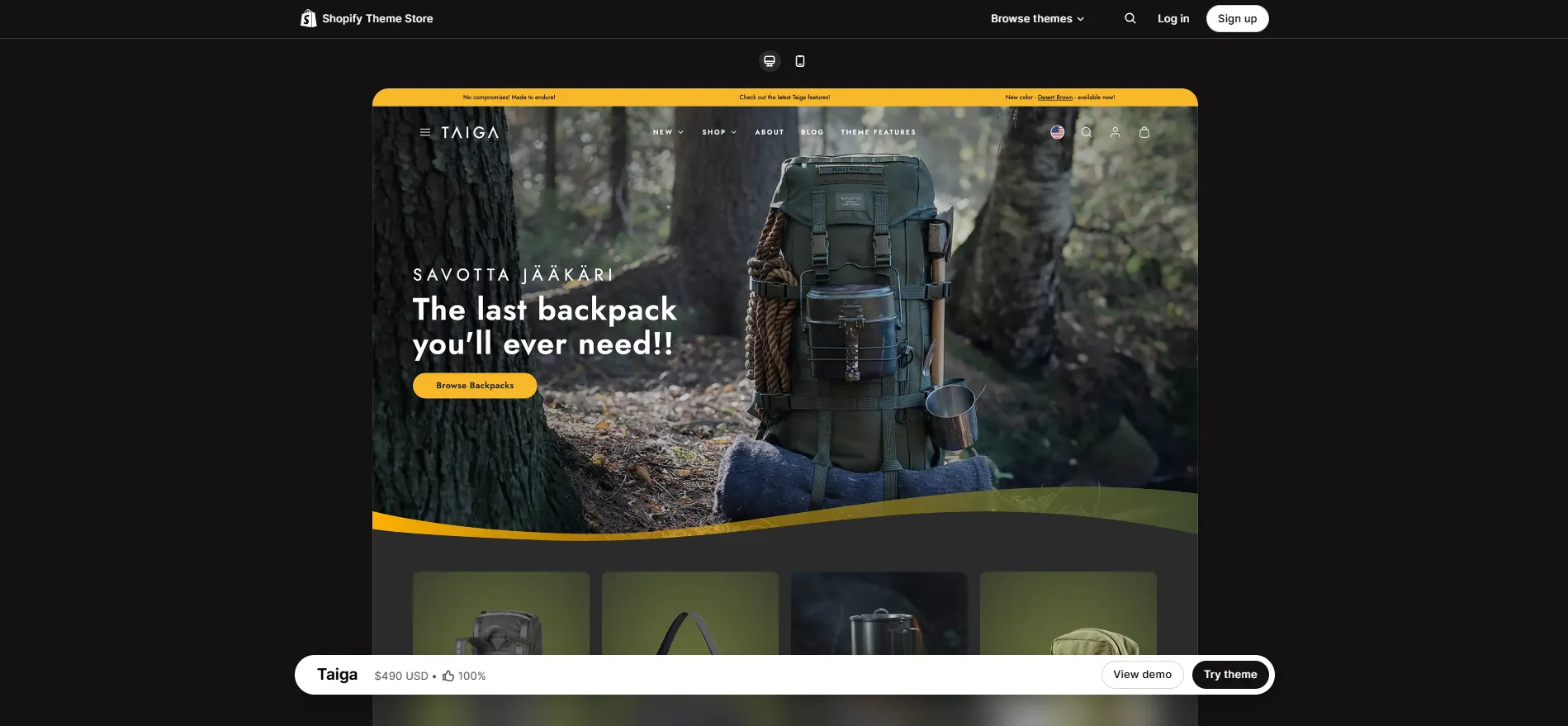
Taiga (by Woolman)
With a strong focus on mobile performance, Taiga combines speed with advanced functionality. It gained significant traction in 2026 for delivering fast load times on mobile devices while still supporting feature-rich storefronts, making it ideal for conversion-driven brands.
Impulse (by Archetype Themes)
Built for high-volume retail environments, Impulse is designed to handle large catalogs and frequent promotions. Its advanced mega menus, filtering options, and promotional layouts make it a strong choice for fast-growing brands.
Prestige (by Maestrooo)
Prestige offers a refined, editorial-style design tailored for luxury brands. Commonly used by jewelry, fashion, and premium lifestyle stores, it creates a polished, magazine-like shopping experience that emphasizes storytelling and exclusivity.
Symmetry (by Clean Canvas)
Known for its balance and versatility, Symmetry adapts well across multiple industries. It is frequently used by home decor, lifestyle, and outdoor brands that need a flexible theme capable of supporting varied product ranges.
Key Differences: Free vs Premium Shopify Themes
When comparing free and premium Shopify themes, the difference is not just about cost. It comes down to flexibility, built-in functionality, scalability, and how well the theme supports long-term business growth. While both options can power a successful store, they are designed for very different stages and needs.
| Aspect | Free Shopify Themes | Premium Shopify Themes |
| Cost | Free with all Shopify plans, no upfront investment required. | One-time purchase, typically between $250 and $400. |
| Design Flexibility | Limited layout and styling options, suitable for basic branding. | High design flexibility with multiple layouts, styles, and sections. |
| Customization Options | Basic customization through theme settings only. | Advanced customization controls for layouts, content, and visuals. |
| Built-in Features | Core ecommerce features only, often requires apps for extras. | Includes advanced features like mega menus, filters, and promotions. |
| Performance and Speed | Lightweight and fast, optimized for simplicity. | Optimized for performance while supporting complex layouts. |
| SEO Readiness | Clean code and solid SEO fundamentals. | Enhanced SEO features with richer content and structure options. |
| Scalability | Best for small catalogs and early-stage stores. | Built to support growth, large catalogs, and high traffic. |
| Support and Updates | Maintained and updated directly by Shopify. | Supported by theme developers with regular updates and documentation. |
| Best For | Startups, small businesses, and test stores. | Growing brands, established businesses, and conversion-focused stores. |
Cost vs Value: Is a Paid Theme an Investment?
Evaluating free and paid Shopify themes requires looking beyond initial cost. Paid themes often deliver long-term return on investment by reducing the need for multiple apps, which can cost more monthly than the theme itself.
Built-in features simplify store management and improve performance by minimizing third-party dependencies. This can lead to faster load times and a smoother user experience.
For growing businesses, premium themes support faster expansion by offering flexibility and scalability. Instead of rebuilding the store later, investing early can save time and development costs.
For a deeper understanding of building a scalable ecommerce foundation, merchants can follow the comprehensive Shopify store setup guide that covers everything from design and functionality to performance optimization.
Final Verdict: Free or Paid Shopify Theme?
Choosing between free vs paid Shopify themes ultimately depends on your business stage, budget, and goals. Free themes are excellent for beginners, small catalogs, and rapid launches. They are reliable, fast, and supported directly by Shopify.
Paid themes are better suited for established or growing brands that require advanced customization, stronger branding, and built-in conversion tools. When used strategically, premium themes can be a valuable long-term investment.
There is no universal right answer. The best choice is the one that aligns with your current needs while supporting future growth. Understanding the differences between free vs paid Shopify themes allows you to make a confident, informed decision that supports your ecommerce success.