

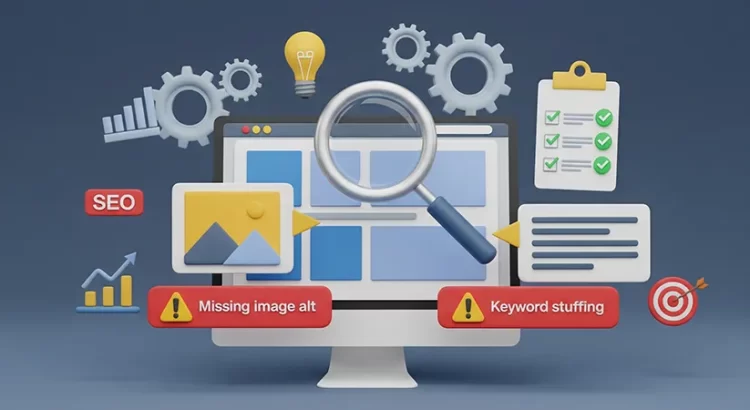
Struggling with poor search performance despite having good content? On-page SEO issues like missing meta tags, poorly structured headings, or keyword misuse often hold websites back.
If you’re dealing with ranking drops or visibility problems, it’s worth looking at the bigger picture in resources like the SEO Troubleshooting Guide: Diagnosing & Fixing Common Ranking Issues. That broader guide helps you understand different causes of ranking fluctuations, while this article zooms in specifically on page-level errors and fixes.
On-page optimization plays a central role in search rankings. Search engines rely on well-structured pages to interpret content and match it to user intent. Even if your site has strong backlinks or passes technical audits, weak on-page elements can prevent you from achieving sustainable visibility.
This guide will walk you through the most common on-page SEO problems, explain why they harm rankings, and provide actionable steps to optimize your content and structure. By the end, you’ll have a clear framework for diagnosing and correcting the issues that often go unnoticed but make a big difference in performance.
Common On-Page SEO Errors to Watch For
Even if your content is high-quality, on-page SEO mistakes can prevent it from ranking. These errors impact how search engines interpret your pages and how users experience them. Addressing them systematically is essential for better search visibility.
1. Missing or Poorly Written Meta Tags
Meta tags, especially title tags and meta descriptions, are often the first thing users see in search results. They help search engines understand the page topic and influence click-through rates.
Pages with missing or duplicate titles confuse search engines, and weak descriptions may fail to attract clicks. According to leading SEO specialists in India, optimizing meta tags remains one of the most effective ways to boost rankings and improve user engagement.
Common mistakes include:
- Using identical titles across multiple pages.
- Overloading titles or descriptions with keywords unnaturally.
- Skipping meta descriptions entirely, leaving auto-generated snippets.
- Writing vague descriptions that don’t communicate value.
To fix this, craft unique titles under 60 characters that incorporate your primary keyword naturally. Meta descriptions should be concise, persuasive, and include related keyword variations to entice clicks while reflecting the page’s content accurately.
2. Weak Heading Structure (H1, H2, H3 Issues)
Headings serve as signposts for both readers and search engines. A well-structured heading hierarchy improves readability and helps search engines understand your page’s organization.
Common problems include:
- Multiple H1 tags on one page, making it unclear which is the main topic.
- Headings that don’t match the content they introduce.
- Missing subheadings, leaving long blocks of text hard to scan.
- Jumping between heading levels (H2 to H4) without logical progression.
The solution is to use a single H1 as the main page title, H2s for primary sections, and H3s for subsections. Keywords should appear naturally without stuffing, and headings should guide users clearly through your content.
3. Thin or Low-Quality Content
Thin content refers to pages that lack depth or fail to satisfy user intent. Such pages rarely rank well because they do not provide enough value.
Typical causes include:
- Pages under 300 words with minimal explanation.
- Duplicate or copied text.
- Outdated or generic information.
- Lack of examples, visuals, or supporting data.
Improving thin content involves auditing weak pages and expanding them with detailed explanations, examples, images, and FAQs. Make sure every page addresses user intent fully and demonstrates authority on the subject.
4. Keyword Misuse (Stuffing or Irrelevance)
Keyword stuffing and misuse can harm rankings and frustrate users. Search engines now prioritize natural, readable content over repetitive keyword use.
Signs of misuse include:
- Keywords repeated unnaturally throughout the text.
- Content written mainly for search engines rather than human readers.
- Targeting irrelevant keywords that don’t match user intent.
Optimize keywords by using them strategically in titles, headings, and early paragraphs, while keeping readability a priority. Include semantic variations and related terms to cover the topic comprehensively.
5. Poor Internal Linking
Internal links help search engines crawl your site effectively and distribute link authority, while also guiding users to related content. Without a strong internal linking structure, valuable pages may remain undiscovered.
Common problems include:
- Orphaned pages with no internal links pointing to them.
- Over-optimized anchor text used repeatedly.
- Too many links on a page, diluting their value.
- Links only in menus, ignoring contextual connections within content.
Fix internal linking by creating logical connections between relevant pages, using descriptive anchor text that reflects the target page’s topic, and routinely auditing your site to reconnect or update links.
6. Unoptimized Images & Media
Images and other media enhance user experience but can negatively affect SEO if poorly handled. Large files slow down page speed, and missing alt text reduces accessibility.
Common mistakes include:
- Missing alt text, which prevents search engines from understanding the image.
- Large image files that reduce page load speed.
- Irrelevant filenames like “image123.jpg.”
- Videos without transcripts or captions, limiting SEO and accessibility.
Optimize media by compressing images before uploading, using descriptive filenames and alt text, and adding video transcripts or schema markup where possible. This improves both user experience and search visibility.
Step-by-Step Process to Fix On-Page SEO Errors
Fixing on-page SEO issues effectively requires a systematic approach rather than random patches. A structured process ensures that each element is addressed without creating new problems or overlooking critical errors.
1. Run a Comprehensive On-Page Audit
Start by auditing your site to identify existing issues. Tools like Google Search Console, Screaming Frog, SEMrush, and Ahrefs are invaluable for detecting missing meta tags, broken headings, thin or duplicate content, unoptimized images, and poor internal links. During this step, generate a list of all pages and their corresponding issues to form a clear roadmap for fixes.
2. Prioritize High-Impact Pages
Not all problems carry the same weight. Focus first on pages with missing or duplicate title tags, very thin content, or slow page performance, as these issues have the greatest effect on search rankings. High-traffic pages or those critical to conversions should also be treated as priority targets for optimization.
3. Implement Structured Updates
Once you know what to fix, address each type of issue step by step. Rewrite weak content, optimize titles and meta descriptions, correct heading hierarchies, improve internal linking, and compress or rename images. Tackling one category at a time ensures that changes are applied consistently and reduces the risk of errors.
4. Monitor Results and Adjust
After implementing changes, monitor performance using Google Search Console or analytics tools. Track metrics such as impressions, clicks, and average ranking positions. SEO improvements are rarely instant; look for gradual upward trends and make further refinements where needed.
Looking for more practical tips and strategies to improve your website’s performance and stay updated on the latest trends? Explore our latest articles to gain insights on SEO, digital marketing, and web design that can help you optimize your online presence.
If you’re interested in tools, guides, and expert resources to support your ongoing website optimization efforts, check out our comprehensive resources for actionable recommendations and detailed how-to guides.
Best Practices for Optimizing Content & Structure
Fixing on-page SEO errors is only part of the solution. Following consistent best practices helps maintain long-term performance and prevents issues from recurring.
- Write for users and search engines: Create content that is engaging and valuable for readers, while naturally incorporating relevant keywords and semantic variations to help search engines understand context.
- Maintain a clear hierarchy: Organize content using headings, subheadings, and bullet points to make pages easy to read and navigate. Logical structure improves both user experience and SEO.
- Keep content fresh and relevant: Regularly update articles with new data, examples, insights, or FAQs to maintain authority and relevance in search results.
- Ensure accessibility and usability: Use descriptive alt text for images, readable fonts, responsive layouts, and clear navigation to make content accessible to all users and optimize performance on different devices.
- Follow consistency across the site: Apply standardized formats for headings, meta tags, and internal linking across all pages to reinforce a cohesive structure that search engines can easily crawl and index.
If you are looking for a broader explanation of how to systematically identify ranking issues, you can read this resource on diagnosing and fixing SEO problems, which explains how to uncover root causes and recover visibility.
Conclusion: Your Path to On-Page Recovery
Fixing on-page SEO problems is not a one-time task but an ongoing process. Meta tags, headings, content quality, and internal linking all work together to create a foundation that search engines can easily understand. When these elements are missing or poorly optimized, rankings stagnate.
By identifying errors, applying structured fixes, and adopting best practices, you create a user-friendly and search-friendly site. This sets the stage for stronger rankings, higher visibility, and consistent organic traffic growth.
Strengthening Your On-Page SEO for Long-Term Success
FreelanceWebDesigner.biz helps businesses identify and fix on-page SEO issues that are holding back their search performance. From optimizing meta tags and headings to improving content quality and internal linking, we provide a comprehensive approach tailored to your website’s needs. By addressing these core areas, your site not only becomes more visible in search results but also offers a better experience for visitors, encouraging engagement and conversions. Contact us today to audit your website, resolve on-page SEO problems, and start improving your rankings with a strategy that delivers measurable results.