

Navigating the digital marketing trends in 2026 requires a profound shift in how brands perceive the intersection of technology and human psychology. As we move into an era defined by hyper-intelligence and seamless connectivity, the strategies that once served as the gold standard are rapidly being replaced by more nuanced, automated, and human-centric approaches.
Staying ahead of the curve is no longer just about adopting new tools; it is about understanding the fundamental transformation of consumer behavior. In this competitive landscape, the strategic application of comprehensive digital marketing services ensures that businesses failing to adapt to these shifts do not risk becoming invisible in an increasingly crowded digital ecosystem.
Following the correct trajectory allows a brand to foster deeper trust, ensure data privacy, and maintain a sustainable competitive advantage. By avoiding the noise of short-lived gimmicks and focusing on integrated, value-driven strategies, organizations can build a resilient presence that resonates with the sophisticated audience of the modern age.
Crucial Digital Marketing Trends
The landscape of digital marketing trends has transitioned from a period of experimental artificial intelligence to one of total integration. Marketers are no longer just competing with other brands; they are navigating a complex world of automated agents, immersive storefronts, and privacy-focused data architectures. Success now depends on the ability to harmonize high-tech automation with high-touch human connection.
1. From SEO to GEO (Generative Engine Optimization)
The traditional model of searching for information through a list of blue links is effectively a relic of the past. For years, search engine optimization focused on ranking signals such as keywords, backlinks, and technical performance to secure visibility within search results
As user behavior and technology evolved, search engine optimization trends have gradually moved toward intent-based, structured, and context-rich content rather than purely keyword-driven tactics. This shift has prepared the ground for a more intelligent approach to discoverability.
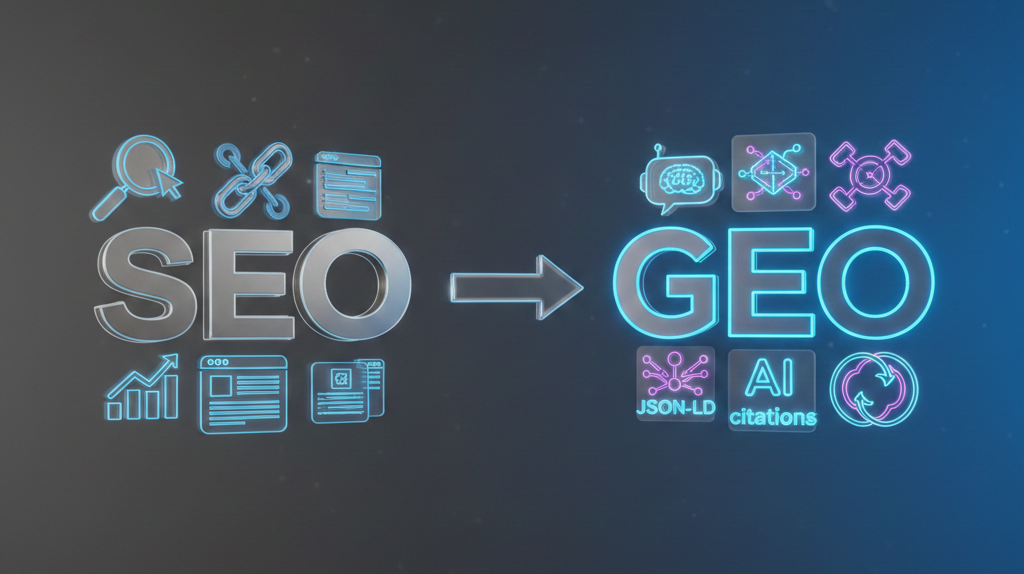
GEO has now become the primary focus for brands seeking visibility. Instead of optimizing for specific keywords to rank on page one of a search engine, the goal is to become a cited authority within the conversational responses provided by generative AI models.
The Infrastructure of AI Citations
AI models do not “crawl” the web in the traditional sense; they digest, interpret, and synthesize information. To be selected as a source, content must be structured in a way that AI agents can easily parse. This includes the heavy use of structured data, JSON-LD schemas, and semantically clear hierarchies. Being featured in an AI’s “Sources” list is the new equivalent of a top organic ranking.
Priority on Fact-Density and Authority
Generative engines prioritize content that provides unique, verified data over generic summaries. To succeed here, brands are moving toward “Answer-Ready” content—paragraphs and data points that can stand alone as a definitive answer to a user’s complex query. This involves identifying “citation gaps” where competitors are mentioned by AI and filling those gaps with superior, data-backed insights.
2. The Rise of Agentic AI
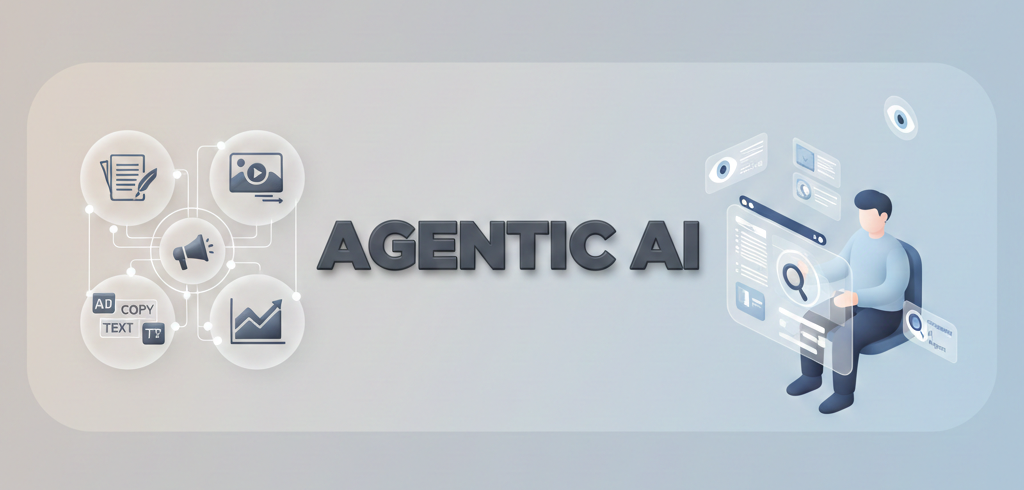
The shift from assistive AI (which suggests) to agentic AI (which executes) has revolutionized the internal and external operations of modern brands. In this environment, marketing systems are no longer passive tools; they are autonomous agents capable of managing entire workflows with minimal human intervention.
Autonomous Campaign Assembly
Marketing teams have evolved into system architects. They define the goals—such as increasing retention among a specific demographic—and the agentic AI handles the execution. This includes drafting landing pages, creating A/B copy variants, generating video thumbnails, and even reallocating ad budgets in real-time based on live performance data.
Negotiating with Consumer Agents
A unique challenge has emerged: marketing to other AI agents. Many consumers now use personal AI assistants to “gatekeep” their digital lives. These agents filter out irrelevant ads and only present the user with options that meet strict criteria. Marketers must now ensure their brand’s value proposition is “readable” and attractive to these automated decision-makers, creating a Business-to-Agent (B2A) framework.
2. Privacy-First “Zero-Party” Data
As traditional tracking methods like third-party cookies have finally been phased out, the focus has shifted to the most reliable source of information: the customer themselves. These online marketing trends emphasize a transparent value exchange where users willingly provide their data.
Incentivized Value Exchanges
To gather zero-party data, brands are moving away from passive observation and toward interactive engagement. This is achieved through personalized quizzes, style assessments, and interactive calculators. In exchange for telling a brand their specific preferences, the consumer receives an immediate reward—whether that is a custom discount, a tailored product recommendation, or exclusive content.
Preference Centers and Trust Architecture
Trust has become a brand’s most valuable currency. Brands are now building robust “Preference Centers” where users can control exactly what data they share and how it is used. This transparency doesn’t just satisfy regulatory requirements; it builds a psychological bond with the consumer, who feels in control of their digital relationship with the brand.
4. Video Commerce & Shoppable Entertainment
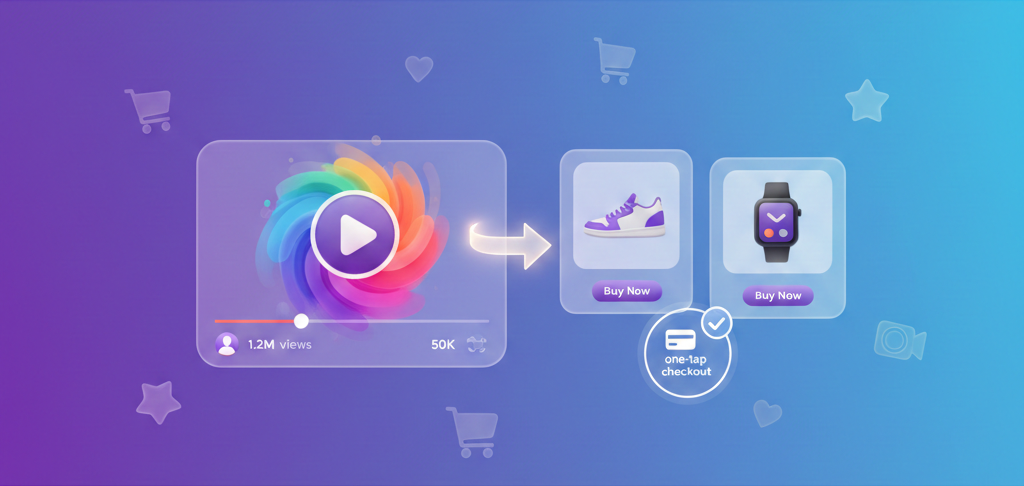
The boundary between entertainment and commerce has completely dissolved. Short-form video platforms have moved beyond being mere discovery tools to becoming full-scale retail ecosystems where the path from inspiration to purchase is instantaneous. At the same time, modern e-commerce is becoming less about standalone online stores and more about distributed shopping experiences embedded across social, video, and marketplace platforms, reflecting broader ecommerce business trends that prioritize seamless, content-driven buying journeys.
Frictionless In-Feed Checkout
Viewers no longer tolerate being redirected to an external website to make a purchase. Integrated checkout systems within platforms like TikTok, Reels, and YouTube Shorts allow for a one-tap buying experience. This “one-click” reality has made video the most powerful conversion tool in the history of the internet.
The Maturity of Live-Stream Shopping
Live-streaming has matured into a sophisticated form of “shoppable entertainment.” These are not just sales pitches; they are high-production value events that combine community interaction with exclusive product drops. The real-time feedback loop allows hosts to address customer concerns instantly, drastically reducing the hesitation that often accompanies online shopping.
5. Creator Co-Creation (The Evolution of Influencers)
The era of the “sponsored post” has been replaced by a much deeper level of integration between brands and creators. Influencer marketing has matured into a model of co-creation where the creator is an integral part of the brand’s creative and strategic engine.
Creators as Creative Directors
Brands are increasingly bringing creators into their inner circles, often naming them as “Creative Directors” for specific product lines or seasons. This shift ensures that products and campaigns are built with the creator’s audience in mind from day one, rather than trying to force-fit a finished product into a creator’s feed later on.
Equity and Long-Term Partnerships
The focus has shifted from one-off transactional “shout-outs” to long-term partnerships often involving equity or revenue-sharing models. When creators have “skin in the game,” the authenticity of their promotion reaches a level that traditional advertising cannot replicate. This results in content that is not only more engaging but also carries significantly higher conversion rates.
6. Retail Media Networks (RMNs) Go Mainstream
Retail Media Networks have become the dominant force in the advertising world, acting as “walled gardens” that offer something traditional social media often lacks: closed-loop measurement. These internet marketing trends represent a shift toward placing ads at the very point of purchase.
The Power of First-Party Purchase Data
Retailers like Amazon, Walmart, and specialized niche marketplaces possess the most valuable data of all: what people actually buy. By advertising within these networks, brands can target consumers based on their verified purchase history rather than just their browsing interests. This eliminates much of the guesswork associated with broader digital campaigns.
Standardized Reporting and Incrementality
As RMNs proliferate, the demand for standardized reporting has increased. Brands are now using “data clean rooms” to securely merge their own data with retailer data, allowing them to measure “incrementality”—the exact number of sales that would not have happened without the ad. This level of precision is making retail media a mandatory component of any modern marketing budget.
7. Hyper-Personalization via Context & Emotion
Personalization has moved beyond simple name tags in emails to a state of total contextual awareness. By leveraging emotional AI and real-time environmental data, brands can now meet customers exactly where they are, both physically and emotionally. These online marketing trends are redefining the concept of relevance.
Context-Aware Dynamic Content
Websites and apps in the modern era are no longer static. They adjust their layout, messaging, and even their color schemes based on the user’s current context—including their location, local weather, time of day, and device usage. For example, a food delivery app might highlight “comfort foods” and use a warmer color palette when it detects a rainy evening in the user’s city.
Emotional Intelligence in Interaction
AI-driven sentiment analysis now allows brands to detect the “mood” of a customer through their interactions. If a customer is frustrated, the system can automatically switch to a more empathetic, human-led support channel. If they are excited, the marketing messaging can lean into high-energy, aspirational language. This “mass intimacy” builds a level of loyalty that feels deeply personal to the individual.
8. Community-Led Growth (The Brand Moat)
In a world where AI can generate infinite amounts of content, the noise of public social media has become overwhelming. Mainstream platforms are increasingly crowded with ads, automated posts, and algorithm-driven visibility, making it harder for brands to build genuine relationships with their audiences. This shift reflects broader social media marketing trends where engagement is moving away from public feeds toward more meaningful, two-way interactions. As a result, brands are retreating into private, owned communities to foster deeper relationships and create a defensive moat around their business.
The Rise of Private Social Hubs
Platforms like Discord, Slack, and proprietary brand apps have become the primary venues for high-value customer engagement. These spaces allow for direct, unmediated communication between the brand and its most loyal advocates. Within these communities, brands can host exclusive events, gather early feedback on new products, and facilitate peer-to-peer support.
Advocacy as a Growth Engine
Community-led growth focuses on the “super-user.” By empowering their most passionate customers to become brand ambassadors, companies can drive organic growth through word-of-mouth that is far more effective than paid advertising. This strategy shifts the focus from customer acquisition cost (CAC) to customer lifetime value (CLV), prioritizing the depth of a relationship over the breadth of reach.
9. Immersive “Try-Before-You-Buy” (AR/VR)
Augmented and Virtual Reality have moved from being “cool gimmicks” to being essential tools for reducing buyer friction. Immersive technology is now a standard part of the consumer’s decision-making process.
Spatial Commerce and Virtual Utility
Whether it is virtually “placing” a new sofa in a living room to check for size and style or “trying on” a new shade of lipstick through a smartphone camera, AR provides a level of utility that static images cannot match. This technology significantly reduces return rates because customers have a much clearer understanding of the product before it arrives at their door.
Virtual Showrooms and Brand Worlds
Beyond simple product overlays, brands are creating entire virtual showrooms and immersive “worlds.” Consumers can explore a digital flagship store from their own homes, interacting with products and brand stories in a three-dimensional space. This builds a sense of presence and connection that bridges the gap between the convenience of online shopping and the sensory experience of brick-and-mortar retail.
10. The “Full-Stack” Marketer
The definition of a marketer has fundamentally changed. The modern professional is now a “Product-Marketer hybrid” who possesses a blend of creative, technical, and analytical skills.
The Democratization of Technical Building
Thanks to low-code and AI prototyping tools, marketers are no longer dependent on large engineering teams to launch interactive experiences. A marketer can now build their own custom mini-apps, dynamic landing pages, and automated workflows using simple prompts and visual interfaces. This agility allows for rapid experimentation and a much faster time-to-market for innovative campaigns.
Emotional Intelligence in an Automated World
As AI takes over the “heavy lifting” of data analysis and content production, the value of human-specific skills has skyrocketed. Success now requires a high degree of emotional intelligence, strategic storytelling, and ethical oversight. The “full-stack” marketer is the one who can guide the AI to achieve a vision that is both technically flawless and deeply human.
11. AI-Adaptive Web Design (Living Websites)
Web design is no longer a static, once-built experience; it has evolved into an intelligent, continuously adapting system that reshapes itself based on user behavior, context, and intent. This shift reflects emerging web design trends where flexibility, personalization, and real-time responsiveness are replacing rigid, template-driven structures. Modern websites are becoming “living interfaces” that dynamically adjust structure, navigation, and content in real time rather than relying on fixed templates designed months in advance.
Behavior-Driven Layouts
Instead of every visitor seeing the same homepage, AI-driven design systems now reorganize page layouts based on how a user interacts with the site. A first-time visitor might see an educational, content-heavy experience, while a returning buyer is presented with product shortcuts, personalized recommendations, and streamlined checkout paths. This shift makes web design less about aesthetics alone and more about intelligent user journeys.
Component-Based, Modular Design
Websites are increasingly built using modular design components that AI can assemble, test, and refine automatically. Marketers and designers no longer need to rebuild pages from scratch; instead, AI selects and optimizes design blocks such as hero sections, testimonials, product grids, and call-to-action elements based on performance data. This makes web design faster, more data-driven, and continuously improving rather than static and one-time.
Final Thoughts
The evolution of digital marketing trends has fundamentally redefined the relationship between brands and consumers. Success now hinges on the seamless integration of agentic AI and immersive technology with a steadfast commitment to data privacy and community-led growth. By prioritizing authentic value over mere visibility, companies can navigate this complex landscape with confidence and precision.
Looking forward, the ability to remain agile while maintaining a human-centric focus will be the ultimate differentiator. As these technologies continue to mature, the brands that thrive will be those that treat every digital touchpoint as an opportunity for genuine connection. Embracing this future ensures that your promotional strategies remain both resilient and deeply impactful in an ever-changing marketplace.