


The best Shopify apps directly impact how an online store markets products, manages daily operations, improves conversions, and scales efficiently. As ecommerce competition intensifies moving into 2026, relying solely on Shopify’s default features limits growth. Carefully selected apps help automate workflows, enhance site performance, personalize customer journeys, and support long-term revenue without adding operational strain.
Before adding advanced tools, the store’s core setup must be structured correctly. A well-configured foundation ensures apps function as intended and do not create performance or compatibility issues. To ensure the base configuration is optimized for growth, refer to Shopify Store Setup: The Ultimate Guide for Business Owners, which covers essential setup decisions, theme readiness, and structural best practices.
With thousands of apps available in the Shopify App Store, choosing the right ones is often more challenging than installation itself. Many merchants add multiple apps without a clear strategy, resulting in slower load times, overlapping functionality, and limited impact on sales or customer experience.
This article highlights widely trusted Shopify apps used by successful online stores. The selection is based on active installs, user ratings, real-world reliability, ease of integration with modern Shopify themes, and the ability to support sustainable growth without unnecessary complexity.
Why Shopify Apps Are Essential for Online Stores
Shopify provides a solid core for selling online, but its native features are intentionally broad. Apps extend the platform by adding specialized functionality that would otherwise require custom development. From advanced marketing automation to inventory management and conversion optimization, apps enable stores to adapt quickly to changing business needs.
Automation is one of the most immediate advantages. Tasks such as abandoned cart follow-ups, order tagging, inventory updates, review requests, and customer segmentation can run continuously in the background. This reduces manual workload while maintaining consistency, even as order volume grows.
Customer engagement improves when apps are used strategically. Personalization tools tailor product recommendations, messaging, and offers based on real user behavior. Loyalty, reviews, and push notification apps create ongoing touchpoints that strengthen customer relationships and increase lifetime value without aggressive advertising.
Apps also improve conversion performance by addressing friction points across the shopping journey. Landing page builders, upsell tools, and social proof integrations guide visitors toward completing purchases, boosting average order value and checkout completion rates.
From an operational standpoint, Shopify apps simplify complex store management tasks. Bulk product edits, order fulfillment workflows, data imports, and performance tracking become manageable through centralized dashboards. When combined with expert Shopify website development, apps enable stores to scale efficiently without sacrificing speed, stability, or user experience.
Top 10 Shopify Apps for Online Stores
Below are some of the top Shopify apps trusted by merchants worldwide. Each app addresses a specific growth challenge and integrates well with modern Shopify stores.
1. Rebuy (AI Personalization and Upsells)
Rebuy is one of the most advanced personalization apps available for Shopify. It uses machine learning to analyze customer behavior in real time and deliver highly relevant product recommendations across the shopping journey.
Instead of showing generic suggestions, Rebuy adapts recommendations based on browsing history, cart contents, purchase patterns, and even customer location. These personalized upsells appear on product pages, in the cart, during checkout, and after purchase.
As ecommerce personalization becomes more sophisticated heading into 2026, tools like Rebuy help stores increase average order value without feeling pushy. The experience feels natural and helpful, which improves both revenue and customer satisfaction. For brands focused on data-driven growth, Rebuy is a strong long-term investment.
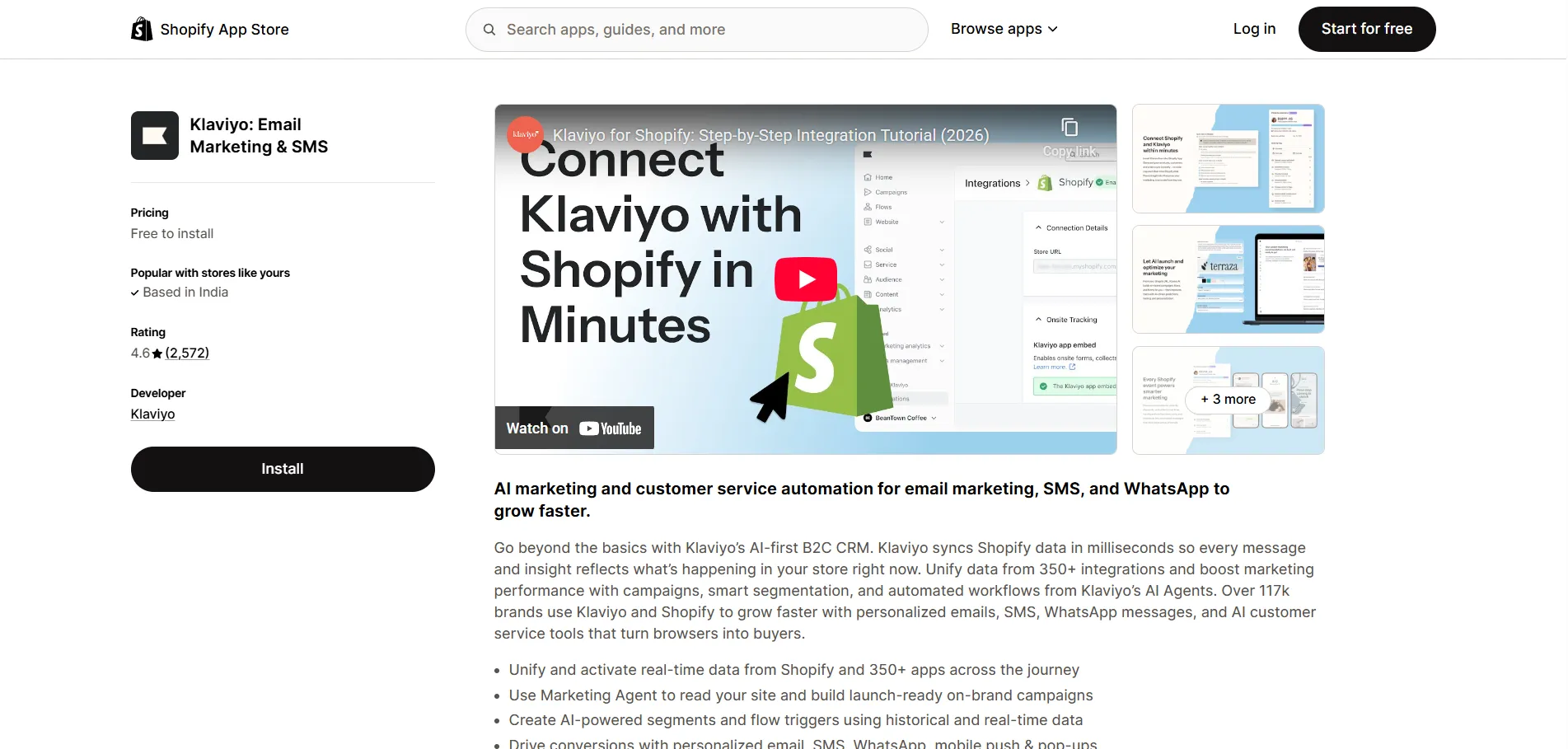
2. Klaviyo (Email and SMS Marketing)
Klaviyo remains a market leader in email and SMS marketing for Shopify. Its strength lies in how deeply it integrates with store data, allowing merchants to create highly targeted and automated communication flows.
The platform excels at lifecycle marketing. From welcome sequences and abandoned cart reminders to post-purchase follow-ups and win-back campaigns, Klaviyo helps turn one-time buyers into loyal customers. As third-party cookies continue to decline, first-party data has become critical, and Klaviyo is built entirely around that concept.
In 2026, brands that own their audience and communicate consistently will outperform those relying only on paid ads. Klaviyo provides the infrastructure needed to build those long-term relationships at scale.
3. PageFly (Flexible Page Builder)
PageFly is one of the most popular page builders in the Shopify ecosystem, powering hundreds of thousands of stores. It is known for its flexibility, reliability, and pricing model that grows with your business.
The app offers a grid-based drag-and-drop editor that allows merchants to build custom product pages, landing pages, and homepage sections without touching code. It also includes a large library of industry-specific templates that can be customized to match any brand style.
A major advantage of PageFly is its ability to create custom Shopify sections that work directly inside the theme editor. This makes it a favorite among store owners who want creative freedom without sacrificing performance or maintainability.
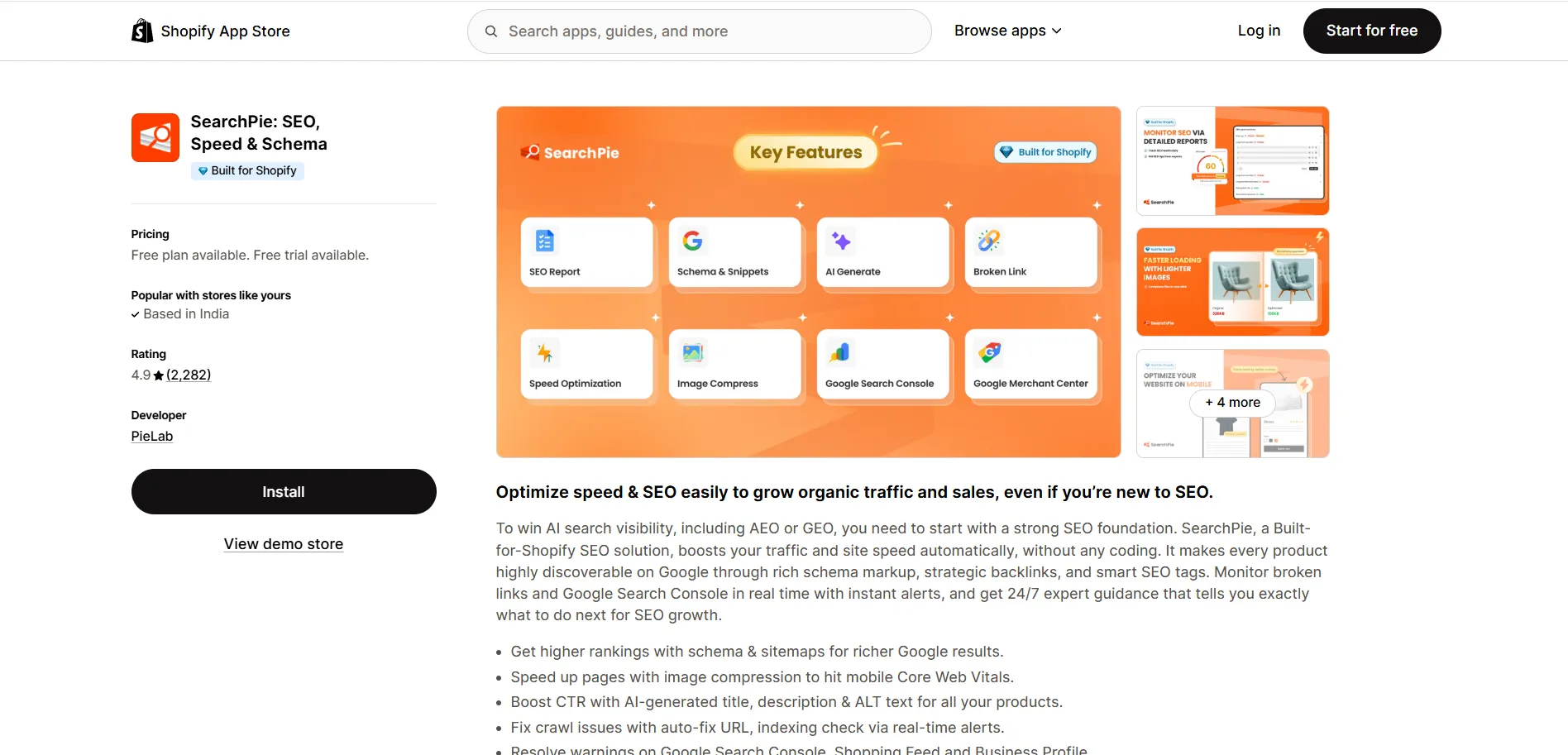
4. SearchPie or SEOAnt (AI SEO and Speed Optimization)
SearchPie simplifies technical SEO and site performance management for Shopify stores. The app automates tasks such as image compression, broken link fixes, meta tag optimization, schema markup, and page speed improvements, helping stores maintain strong organic visibility without requiring coding expertise.
With search engines and AI-driven discovery tools increasingly prioritizing user experience, page speed and structured content are critical ranking factors in 2026.
SearchPie ensures that sites are optimized for both traditional SEO and AI-powered search results, making it easier for merchants to attract and retain organic traffic while maintaining fast, reliable store performance.
5. Outfy (AI Social Media Automation)
Outfy is designed for store owners who want a consistent social media presence without spending hours creating content. The app uses AI to turn product listings into engaging visuals, videos, and short-form content.
It automatically creates Reels, Shorts, TikToks, GIFs, and image posts, then schedules them across platforms like Instagram, Facebook, TikTok, Pinterest, and YouTube. This keeps your brand visible and active on social media with minimal effort.
As social platforms continue to influence buying decisions in 2026, Outfy helps stores generate top-of-funnel traffic and stay relevant without hiring a full-time social media manager.
6. Replo (No-Code Landing Page Builder)
Replo is built for performance-focused brands running paid ads, influencer campaigns, and promotions. While standard Shopify templates are reliable, they often lack the flexibility needed for high-converting landing pages.
Replo provides a no-code editor that gives marketers fine control over layout, animations, and interactive elements. Pages built with Replo are optimized for speed and designed to integrate seamlessly with Shopify checkout.
For brands testing new offers or launching campaigns quickly, Replo enables rapid experimentation without relying on developers for every change.
7. Yotpo (Reviews, Loyalty and UGC)
Yotpo is a comprehensive platform that combines customer reviews, loyalty programs, and referral marketing into a single solution. Social proof remains one of the strongest conversion drivers in ecommerce, and Yotpo helps brands leverage it effectively.
The app collects and displays verified reviews, photos, and user-generated content across your store. Its loyalty features reward repeat purchases, while referral tools encourage customers to bring in new shoppers.
Consolidating these functions into one app helps keep your tech stack lean, which is especially important as stores scale and focus on performance optimization.
8. DSers (Dropshipping and Supply Chain)
DSers is one of the most reliable tools available for stores using a dropshipping model. It simplifies supplier management, order fulfillment, and inventory syncing with AliExpress.
DSers allows merchants to place bulk orders, automatically update tracking information, and manage multiple suppliers from a single dashboard. This reduces manual work and minimizes fulfillment errors.
As supply chain efficiency continues to be a key differentiator, DSers helps dropshipping stores operate more professionally and scale with confidence.
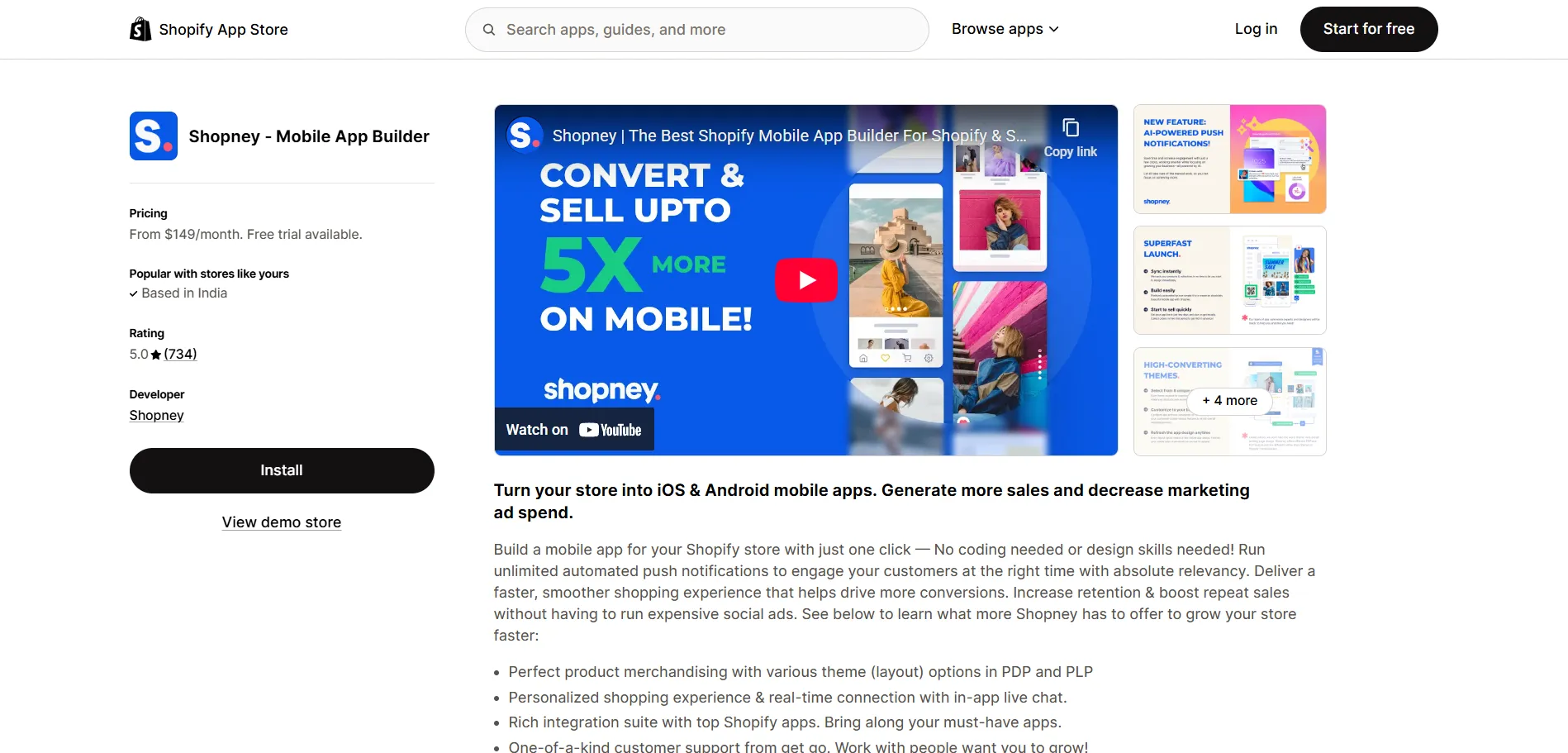
9. Shopney (Mobile App Builder)
Shopney enables Shopify merchants to turn their stores into native mobile apps for iOS and Android. Mobile traffic dominates ecommerce, and having a dedicated app can significantly improve conversion rates and retention.
One of Shopney’s biggest advantages is push notifications. Unlike SMS, push notifications are free and highly effective for promotions, order updates, and re-engagement campaigns.
In a mobile-first ecommerce landscape, Shopney helps brands create a more immersive shopping experience and build stronger customer relationships.
10. Matrixify (Bulk Data Management)
Matrixify is a powerful data management tool designed for growing and enterprise-level Shopify stores. As catalogs and order volumes increase, manual updates become impractical.
The app allows bulk import, export, and updates of products, orders, customers, collections, and more using spreadsheets. It supports Excel and Google Sheets, making it accessible even for non-technical teams.
For stores planning long-term scalability, Matrixify saves countless hours and reduces the risk of data errors.
Tips for Choosing Shopify Apps
Selecting the right apps ensures your Shopify store remains efficient, fast, and focused on growth. The following best practices help maximize value while minimizing potential issues:
- Align with store goals: Choose apps that directly support marketing, sales, or operational objectives. Avoid adding tools that don’t have a clear impact on performance or revenue.
- Evaluate performance impact: Some apps can slow down your site or create conflicts with other tools. Test new apps carefully and monitor load times and functionality.
- Assess pricing and ROI: Consider whether the app’s features justify its cost. Free apps are not always better if they limit scalability, while expensive apps should deliver measurable benefits.
- Plan for long-term growth: Pick apps that can scale as your store grows. Look for tools that handle increasing traffic, product catalogs, or automation needs without requiring constant replacement.
- Avoid app overload: Installing too many apps can complicate store management and reduce site speed. Focus on a lean stack where each app has a clear purpose and complements your store’s ecosystem.
Before installing and configuring apps, it helps to review a guide on setting up a Shopify store for long-term success, especially when planning major updates or launching new campaigns.
Final Thoughts on the Best Shopify Apps
The best Shopify apps are not about adding as many tools as possible. They are about choosing the right combination that improves performance, enhances customer experience, and drives sustainable revenue growth. When selected carefully, apps can simplify operations instead of complicating them.
As ecommerce evolves toward 2026, successful stores will rely on smart personalization, owned marketing channels, automation, and performance optimization. The apps covered in this guide represent proven solutions that align with those priorities.
By investing in the right app stack and reviewing it regularly, merchants can future-proof their stores and stay competitive in an increasingly crowded online marketplace.